
Medieval and Renaissance dog paintings share a single visual lineage — see our Renaissance pet portrait hub for the full classical collection.
What Is a Medieval Dog Painting?
The tradition of depicting dogs in formal portrait styles dates to the medieval and Renaissance periods, when hunting dogs and favoured companions were included in royal and aristocratic portraiture. The visual language of this tradition (dark atmospheric backgrounds, dramatic single-source lighting, rich oil paint with visible brushwork, formal compositional conventions) has become one of the most recognisable and beloved portrait aesthetics.
Furcasso brings this tradition to your specific dog, from a single photo, in approximately 90 seconds.
The Portrait Styles That Capture the Medieval and Renaissance Look
Furcasso offers several styles that directly reference the Old Masters portrait tradition.
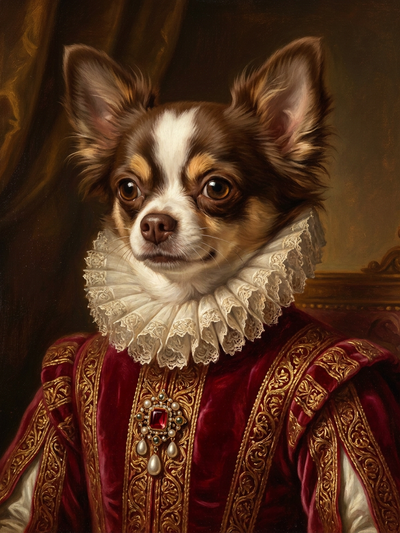
Renaissance Noble: drawn from fifteenth and sixteenth-century European portraiture. Formal, dignified, with the compositional gravity of a court portrait. Your dog rendered as European aristocracy, with all the visual weight that implies. See the full renaissance pet portrait collection for more examples.
Baroque: the dramatic successor to Renaissance portraiture. Extreme chiaroscuro, rich saturated colour, theatrical lighting from a single source against deep shadow. Caravaggio, Rubens, Van Dyck. For dogs with strong features and colouring, this is one of the most visually striking styles available.
Dutch Master: the quieter tradition of the Northern European seventeenth century. Warmer in palette, more intimate in composition, with the careful observation of the natural world that defines Dutch Golden Age painting. See also our renaissance dog painting →
Old Masters: a broader style drawing on the full tradition of pre-modern European painting. Rich, warm, and deeply textured.
Why Dogs Suit the Medieval and Renaissance Style
There is a long history of dogs appearing in formal European portraiture. Hunting dogs, court companions, and favoured breeds appear throughout medieval and Renaissance painting as symbols of loyalty, nobility, and status. The formal portrait conventions of this period (upright composition, careful observation, dignified bearing) suit dogs naturally.
The contrast between the gravity of the style and the specific animal you know also produces results that are simultaneously regal and inherently characterful. A dog rendered in Renaissance noble conventions looks both completely at home and distinctly themselves.
Which Dog Breeds Suit Medieval and Renaissance Styles Best
Dogs with naturally noble or dignified bearing suit the formal aesthetics of Old Masters portraiture exceptionally well.
Large breeds with strong bone structure: Great Danes, Irish Setters, Weimaraners, Greyhounds, and similar breeds have the proportions and bearing that Old Masters compositional conventions were designed to capture.
Dogs with rich, complex colouring: the layered oil painting technique of Baroque and Dutch Master styles is particularly effective for dogs with varied colouring (tricolour coats, brindle patterns, rich mahogany and gold tones).
Any breed in the right light: every dog becomes a subject of the Renaissance Noble style, regardless of breed. The formal conventions of the style transform the subject. That is part of its appeal.
Medieval Dog Paintings as Gifts
A Renaissance or Baroque dog portrait is one of the most distinctive gifts available for a dog owner. It is immediately recognisable as a specific type of art (the Old Masters aesthetic is culturally embedded) and it is personal, because it depicts their specific dog.
Popular occasions: significant birthdays, Christmas, Father's Day, housewarming, and any occasion where you want to give something that will be displayed rather than stored.
Read our guide to pet portrait gift ideas →
How It Works
- Upload a photo of your dog.
- Choose from Renaissance Noble, Baroque, Dutch Master, Old Masters, or any other style.
- Preview in approximately 90 seconds. Download instantly or order a print with free worldwide shipping.
Not sure which photo to use? Read our photo tips guide →