
The renaissance portrait tradition and your dog
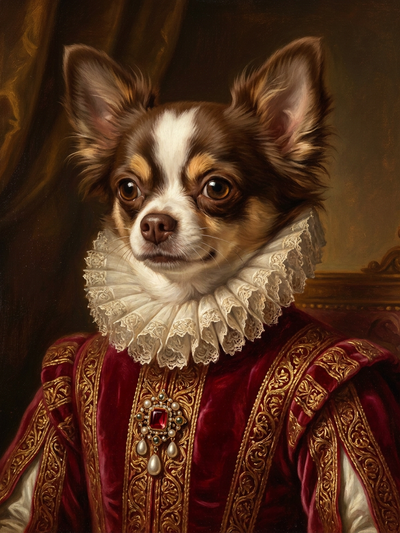
Dogs have appeared in formal European portraiture since the Renaissance period. Titian's Portrait of Charles V includes a hunting dog alongside the emperor. Veronese placed dogs at the feet of his subjects as symbols of loyalty. The visual conventions of the period, including the dark atmospheric background, the single-source directional light, and the gravity of the composition, translate to dogs with unusual naturalness. A dog rendered in renaissance style looks simultaneously regal and entirely itself.
Furcasso's renaissance dog painting style applies these conventions to your specific dog, from a photo you already have.
Which dogs suit the renaissance style
Any dog can produce a strong renaissance painting, but some breeds and coat types produce exceptional results.
Dogs with strong facial structure and longer muzzles, such as Labradors, Retrievers, German Shepherds, Greyhounds, Setters and Spaniels, have the facial geometry that the style's directional lighting works best with. The dramatic light picks out the planes of the face and gives the portrait real depth.
Dogs with rich, warm colouring in gold, amber, mahogany or chocolate suit the tonal warmth of the renaissance palette. Darker-coated dogs produce striking results against the dark backgrounds of the style.
Older dogs with weight and character in their faces are among the best renaissance subjects. The gravity of the style matches the gravity that comes with age.
Read our golden retriever portrait guide and labrador portrait guide for breed-specific advice.
Renaissance painting versus other formal styles
Furcasso offers several styles that reference the classical portrait tradition. The differences are worth understanding.
Renaissance style references fifteenth and sixteenth century European portraiture: formal, dignified, with the compositional gravity of a court portrait. Old Masters takes the same tradition further into the Baroque period, with more dramatic contrast, starker lighting, and darker backgrounds. Baroque is the most theatrical of the three, with extreme chiaroscuro in the tradition of Caravaggio.
All three produce beautiful results for different dogs and different contexts. The free preview lets you try each one and see which suits your specific animal.
See the renaissance pet portrait guide for more detail on the style.
Renaissance dog painting as a gift
A renaissance dog painting is one of the most formal and considered gifts available for a dog owner. It communicates clearly that this is a serious portrait rather than a novelty, because the Old Masters aesthetic is immediately recognisable, and it is personal because it depicts their specific dog.
Popular for significant birthdays, Christmas, Father's Day and housewarming occasions. Framed prints arrive ready to hang with free worldwide shipping.
See our pet portrait gift guide for advice on choosing occasions and styles.
Frequently asked questions
What is the difference between a renaissance dog painting and a regular pet portrait?
A regular pet portrait can be any style, from watercolour to cartoon. A renaissance dog painting is specifically rendered in the visual language of 15th and 16th century European portraiture: formal composition, a single dramatic light source, deep tonal shadows, and a dark atmospheric background. It is the difference between a nice picture of your dog and a portrait that looks like it hung in a European court for four hundred years.
Which breeds look best in a renaissance dog painting?
Every breed works, but dogs with strong facial structure and longer muzzles, like Labradors, Retrievers, German Shepherds, Greyhounds, Setters and Spaniels, catch the directional lighting especially well. Rich warm coats in gold, amber, mahogany or chocolate suit the tonal warmth of the palette, and darker coats look striking against the deep backgrounds. Older dogs with character in their faces are among the best subjects of all.
What photo do I need for a renaissance dog painting?
One clear, front-facing or slightly angled photo where your dog's face fills most of the frame and the eyes are sharp. Natural light is best, and avoid flash. A normal phone photo is perfect. If you are not sure it will work, upload it and preview free.
How long does a renaissance dog painting take?
About 90 seconds. You preview the finished portrait before paying anything, and you can regenerate up to 10 times free until it is right.
Can I get a renaissance dog painting as a large framed print?
Yes. Every portrait is available as a digital download, an unframed print, or a framed print ready to hang, up to large gallery sizes, all with free worldwide tracked shipping. Every print includes a free HD digital copy.