
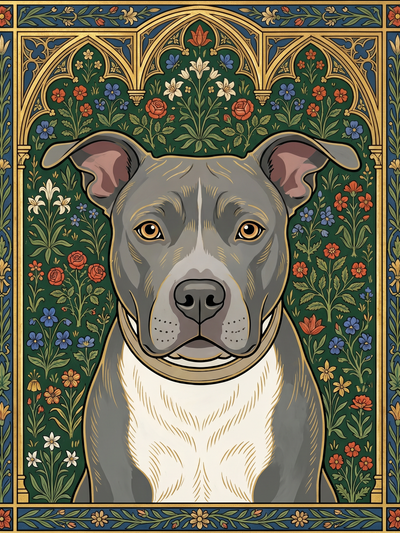
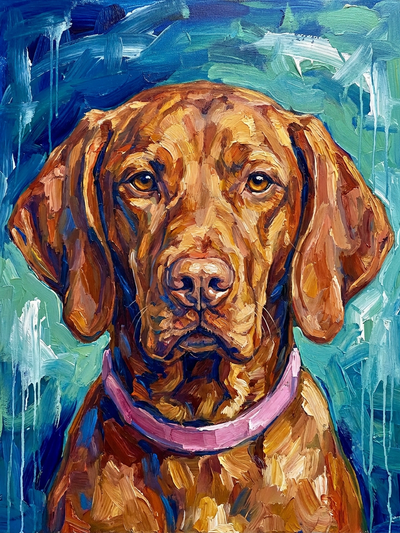
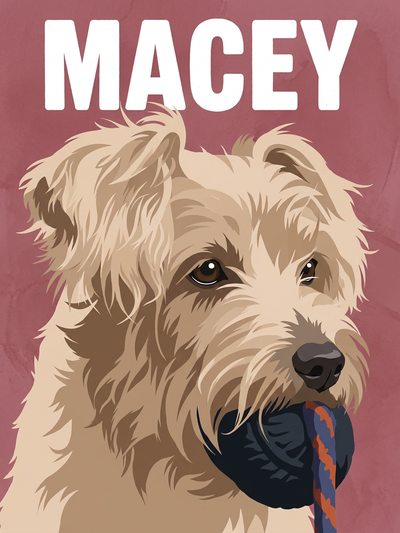
The medieval portrait tradition produced some of the most visually arresting images ever made. The illuminated manuscript border, the gilded arch, the jewel-toned background packed with symbolic flora - all of it speaks of an era that treated portraiture as something sacred. Turning your dog or cat into a medieval portrait doesn't just produce something beautiful. It produces something that looks genuinely old, genuinely important, and genuinely unlike anything else on a wall.
What makes this style distinctive
The Medieval Portrait style draws on the visual language of the 13th to 15th century illuminated manuscript tradition. The key elements are the decorative border - typically a flat geometric or floral motif rendered in deep jewel colours with gold leaf accents - and the architectural framing device, usually a gothic arch of the kind found in prayer books and devotional texts of the period.
The subject - your dog, cat or other pet - sits within this frame with the formal, frontal composition of a medieval saint's portrait. The combination of ancient formal device and living animal subject is what gives the style its particular quality. The pet is not shown as a pet. It is shown as a figure of genuine importance, rendered by a craftsman who took the work seriously.
Which pets suit the medieval style
Dogs with strong, readable facial features work particularly well - breeds where the face has clear structure that reads as dignified rather than merely cute. Large breeds, working dogs, and dogs with a naturally serious expression tend to produce the most striking results. That said, the contrast between an elaborate medieval border and a small, comic-faced breed produces its own kind of portrait - something that is funny and beautiful at the same time. Cats suit the style extremely well. The natural stillness of a sitting cat, combined with its tendency to look directly at the viewer, maps perfectly onto the frontal composition of medieval portraiture.
The illuminated border
The border is as important as the subject in a medieval portrait. It is where the style makes its most distinctive statement. The Furcasso Medieval Portrait generates bespoke borders based on the palette and composition of each portrait - the colours in the border echo and complement the colours of the pet, and the density of the floral and geometric patterning varies with the overall complexity of the image. No two borders are identical. The gold leaf effect on the arch and border frame is a consistent feature, giving every portrait the characteristic warm luminosity of the illuminated manuscript tradition.
Photo tips for the best result
A clean, direct face-on photograph produces the best medieval portrait - the frontal composition of the style works best when the source image already has the subject looking toward the camera. Good lighting is more important than usual for this style, as the flat, high-contrast rendering will amplify any muddiness in the original photograph. A plain or simple background in the source photo is preferable, as the medieval border and arch will provide all the background detail the portrait needs.