
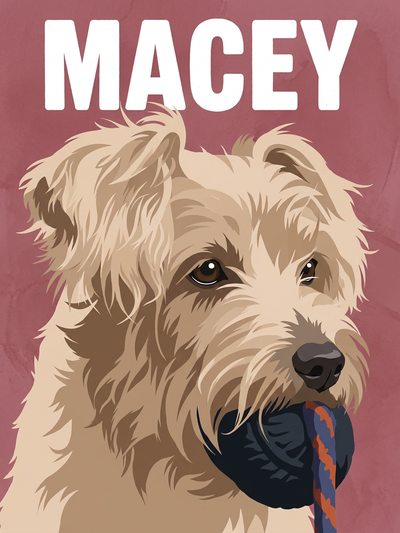
Westies have a quality that makes them immediately recognisable in any context — the bright white double coat, the upright ears, the round dark eyes, and the expression that sits somewhere between complete self-confidence and mild impatience. They are small dogs who have never been informed of this, and this quality of utterly unselfconscious boldness is one of the most engaging things a portrait subject can have. A Westie looks at the camera the way a Westie looks at everything: directly, with interest, and on their own terms.
Coat and colour
The Westie coat is always white — a double coat with a harder outer layer and a soft dense undercoat — and the portrait result depends on how well the source photo captures the coat's texture and the dog's expression.
In oil painting the Westie's white coat takes on the warm and cool tones of the surrounding light, and the darker nose, eye rims and lips create a natural tonal anchoring for the portrait. The hard outer coat has a slightly different texture to the soft coats of breeds like the Bichon or Maltese, and this texture gives painterly styles something firmer to work with.
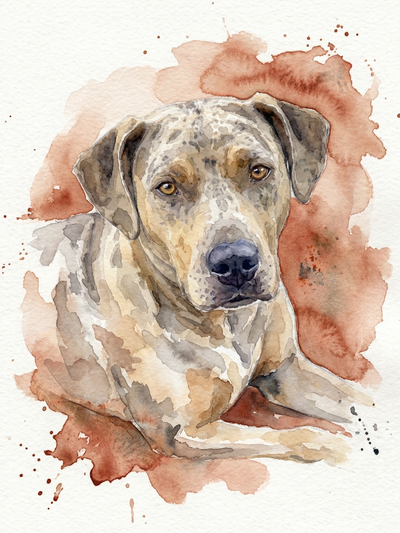
In watercolour the white coat is best rendered with restraint — using the paper's own brightness rather than applying white paint — and the result when the source photo is well lit is a portrait of real freshness and energy.
The Westie face has a roundness and a particular forward energy that sketch and line-based styles capture well. The strong facial structure — more defined than softer-faced white dogs — gives the sketch style clear lines to work with.
Recommended styles for the Westie
Oil painting works with the texture of the hard outer coat beyond simple white. Watercolour is fresh, clean and suits the breed's bright character. Sketch translates the strong facial structure into expressive line work. Pop art turns the bright white coat and bold dark features into strong graphic results. Renaissance suits the Westie's self-possession, with a certain irony that works in the breed's favour.
Photo tips
The upright ears are a defining feature and should be visible — both ears forward and alert. A Westie in alert mode, ears pricked and eyes bright, produces a more characterful portrait than a relaxed pose. Natural light from the front picks out the facial features clearly against the white coat. As with all white dogs, avoid flash.