
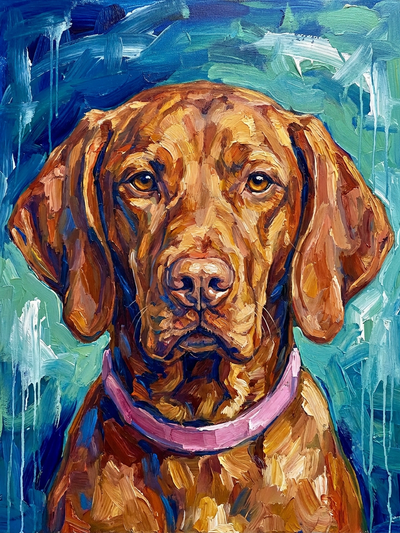
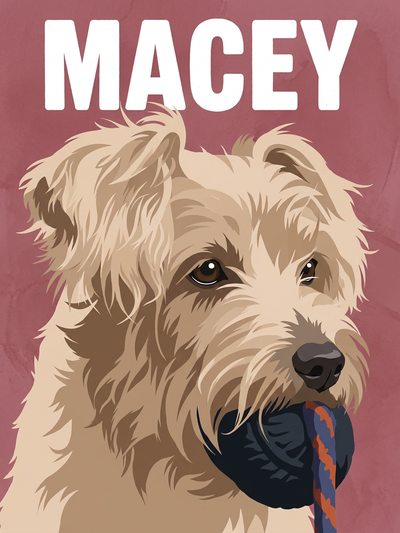
The Vizsla is one of the few breeds where the coat, the nose, the eyes and the nails are all the same rich golden rust — a consistency of colour that gives the dog an almost monochromatic beauty that is extremely rare in the animal world. This uniform warmth of tone is something that portrait styles respond to in interesting ways — the challenge is not finding colour contrast but finding depth and subtlety within a single warm register, and the results when a style manages this are portraits of unusual sophistication.
Coat colours and how they render
The Vizsla coat is always golden rust — the shade ranging from pale golden through to deep rust depending on the individual dog and the time of year. The short, smooth coat has a slight sheen that shows the athletic body structure clearly.
In oil painting the golden rust coat deepens to extraordinary warmth. The painting tradition's natural tendency toward amber and ochre tones amplifies the coat's colour rather than competing with it, and the result is a portrait that seems to glow from within. The amber or light brown eyes, matching the coat in tone, create a portrait where face and coat are unified in warmth.
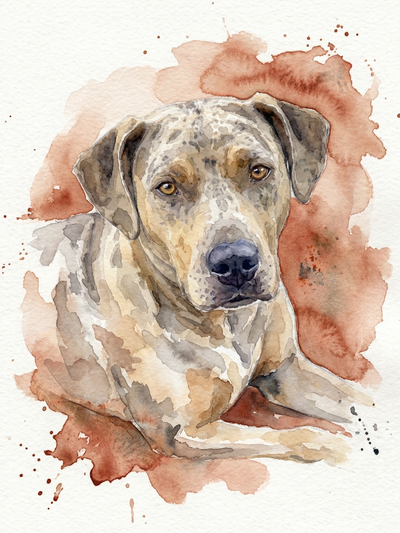
In watercolour the uniform warmth of the Vizsla coat produces portraits of great harmony. The loose washes stay within the warm register of the coat and the result has a quality of golden cohesion that few other breeds can achieve.
Impressionist style finds the subtle colour variation within the apparently uniform coat — the cooler shadows on the underside of the body, the way direct sunlight bleaches the spine and flanks slightly lighter than the flanks in shadow — and builds a portrait of surprising tonal variety from what appears a simple colour.
Recommended styles for Vizslas
Oil Painting — amplifies the golden rust to its warmest and richest expression. Watercolour — the golden harmonic quality of the coat suits the luminous warmth of this style. Impressionist — finds depth and variation within the uniform colour register. Renaissance — the aristocratic bearing of the breed suits the formal tradition. Golden Hour Portrait — the warm amber light of the style and the warm amber coat create an obvious harmony.
Photo tips
The Vizsla's uniform golden coat requires more careful attention to light direction than multi-coloured breeds. Without colour contrast to create structure in the portrait, the tonal variation created by light and shadow does the compositional work. Natural light from the side, picking out the muscle structure and body lines through the smooth coat, gives the portrait the contrast it needs. The amber eyes should be clearly lit and in focus — they are a key focal point in a portrait where everything else is the same warm tone.