
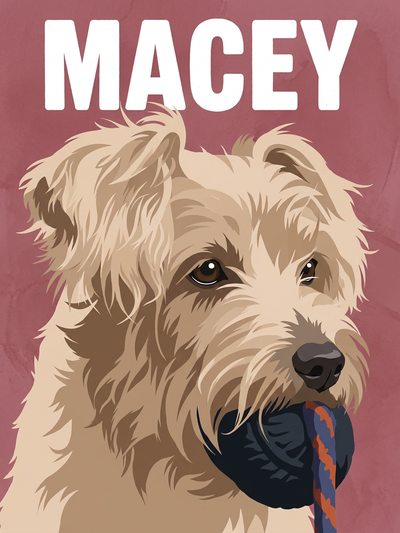
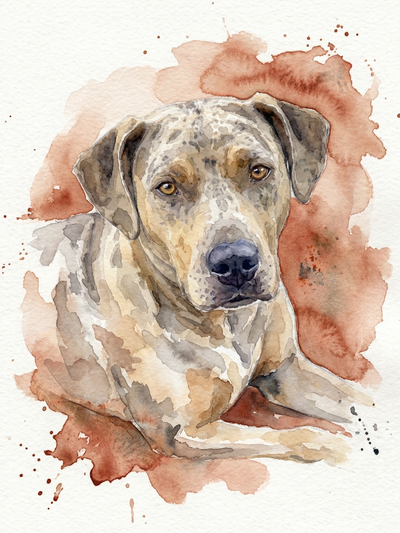
The Tibetan Mastiff is one of the oldest and most primitive dog breeds in the world, used for centuries to guard monasteries, villages and livestock in the Himalayan mountains of Tibet. The breed has barely changed over thousands of years — the large, imposing body, the heavy double coat, the lion-like mane around the head and neck and the expression of calm, watchful authority are the same features that ancient Chinese texts described over two thousand years ago. A Tibetan Mastiff portrait captures a face that has looked essentially unchanged since ancient times.
Coat and colour
Tibetan Mastiffs come in black, black and tan, blue grey, blue grey and tan, brown, brown and tan, red gold and red gold sable. The coat is always thick, coarse and double — with the lion-like mane around the neck and shoulders being the most defining visual feature.
Black and tan Tibetan Mastiffs — the most classic and dramatic colour — produce portrait results of great formal power. In oil painting and Old Masters the deep black outer coat with the warm tan markings and the magnificent mane create portraits of imposing presence.
Red gold Tibetan Mastiffs have the warmest coat in the breed range. The rich golden red in oil painting takes on amber and sienna tones that make the portrait glow. The mane in red gold has a lion-like quality that suits the breed's guardian heritage.
Blue grey and brown varieties produce cooler, more atmospheric results in watercolour and impressionist styles.
Recommended styles for the Tibetan Mastiff
Oil painting is the natural choice for the breed's imposing scale and mane. Old Masters — the ancient guardian heritage and the formal tradition are a natural pairing. Renaissance suits the Tibetan Mastiff's centuries of association with monasteries and nobility. Ancient Egyptian — while Tibetan rather than Egyptian, the breed's ancient guardian role suits the style's ancient sacred associations. Royal Portrait suits the breed's historical associations with Tibetan royalty and monasticism.
Photo tips
The mane is the defining portrait feature of the Tibetan Mastiff and must be shown in full. A photo where the dog is sitting upright with the chest and neck visible gives the mane its greatest prominence. The broad, heavy head should be clearly lit — the deep-set eyes can be difficult to see in poor light through the surrounding coat. Natural front-facing light picks out the face clearly and shows the mane's volume. The scale of the breed means including the head and mane rather than just the face gives the portrait its most impressive result.