
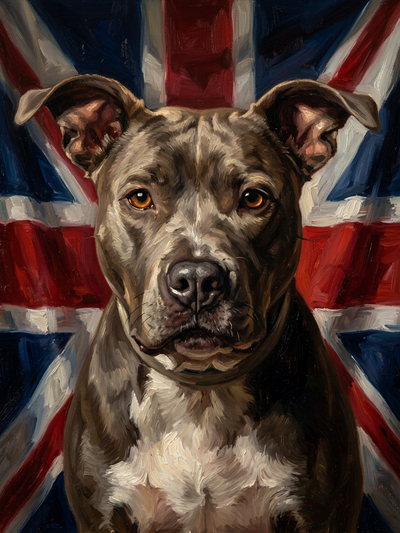
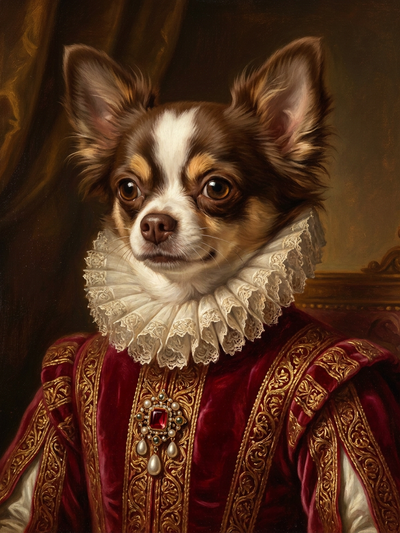
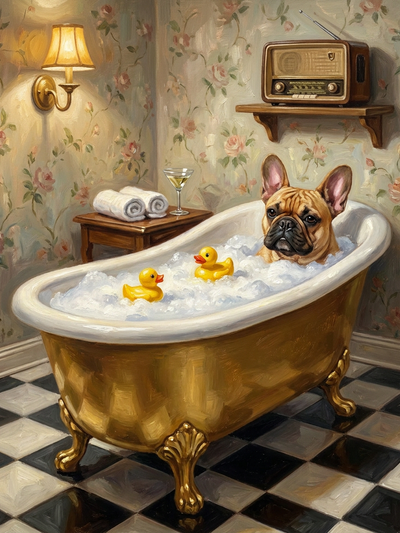
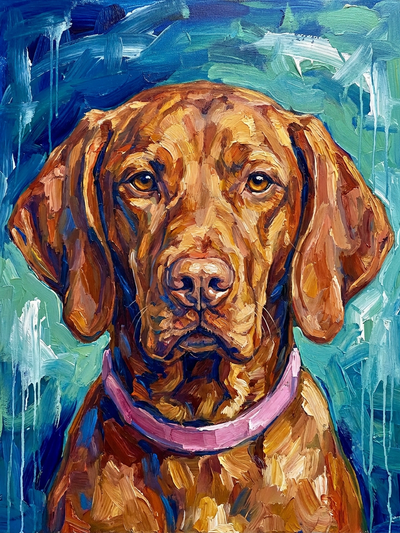
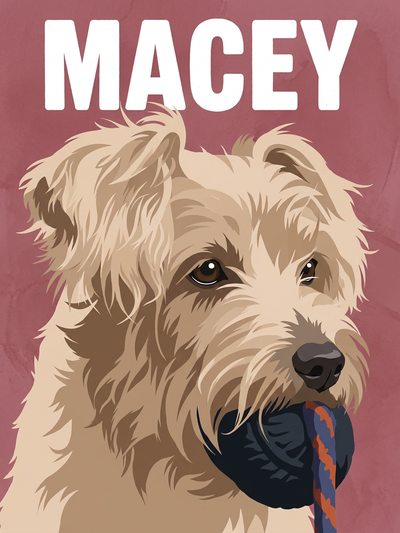
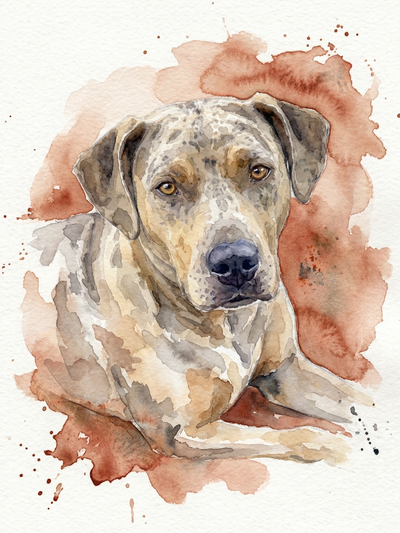
Shetland Sheepdogs have a coat that portrait art responds to immediately. The long, flowing outer coat, the dense mane around the neck and chest, the profuse feathering on the legs and tail — these are features with a natural visual richness that painterly styles find easy to work with. The face, with its intelligent, gentle expression and the long narrow muzzle framed by the full mane, has the kind of quiet beauty that rewards the sustained attention that portrait art provides. A Sheltie portrait in the right style consistently produces one of the most elegant results in the Furcasso range.
Coat colours and how they render
Shelties come in sable, black and white (bicolour), tricolour, blue merle and double merle colour patterns, all with the characteristic white collar and chest markings. The coat is always long and flowing with a harsh outer coat and a soft, dense undercoat.
Sable Shelties — ranging from golden sable through mahogany sable — produce the warmest and most popular portrait results. The long flowing coat in warm amber and gold tones, with the white collar providing contrast, suits oil painting and watercolour almost equally. In oils the sable deepens to extraordinary richness. In watercolour the warm tones stay luminous and flowing.
Blue merle Shelties have the complex mottled coat pattern that watercolour handles with particular atmospheric quality. The cool blue-grey of the merle with white and tan markings produces portraits of exceptional beauty in this style.
Tricolour Shelties — black, white and tan — produce oil painting results with the structured three-tone portrait that classical traditions handle naturally.
Black and white bicolour Shelties produce the most graphic results — bold tonal contrast that suits formal and dramatic styles well.
Recommended styles for Shetland Sheepdogs
Oil Painting — the richest choice for sable and tricolour Shelties. Watercolour — exceptional for blue merle and golden sable coats. Impressionist — handles the flowing long coat's texture and movement with real affinity. Renaissance — the mane and flowing coat suit the formal portrait's compositional conventions. Pre-Raphaelite — the romantic detail of this style complements the Sheltie's flowing coat beautifully.
Photo tips
The mane and flowing coat are as important as the face in a Sheltie portrait, and the source photo should show both. A photo taken at eye level with the dog sitting shows the full mane volume and the facial features together. The long coat photographs best when clean, dry and brushed — any matting or dampness reduces the flowing quality that makes Sheltie portraits distinctive. The merle pattern in particular benefits from natural front-facing light that picks out the full complexity of the coat pattern.