
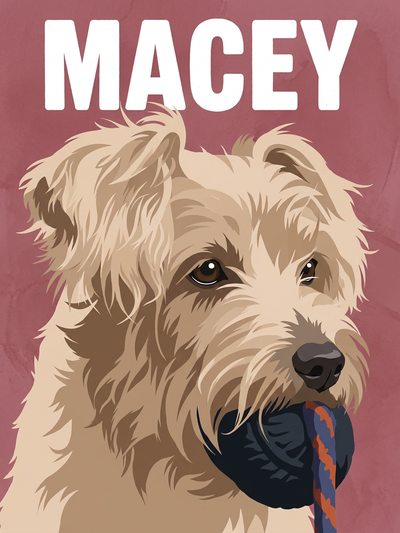
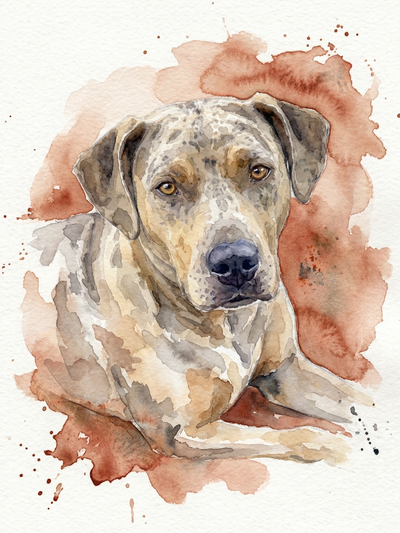
Rottweilers have a face that carries weight — literally and figuratively. The broad, powerful head, the deep-set dark eyes with their expression of quiet authority, the clean black and mahogany coat pattern — these are features that portrait art handles with particular success because they have structure, definition and a natural dignity that the camera sometimes flattens but a portrait preserves. Rottweiler owners know the softness beneath the imposing exterior, and a good portrait captures both.
Coat and colour
The Rottweiler coat is consistent across the breed: a short, dense black outer coat with clearly defined mahogany markings on the muzzle, cheeks, chest, legs and beneath the tail. This consistency makes the Rottweiler one of the more predictable breeds in terms of portrait results — the coat pattern is always the same, so the portrait quality depends primarily on the expressiveness of the individual dog and the quality of the source photo.
In oil painting the black coat and mahogany markings create a classic two-tone structure that the style handles with particular depth. The black coat is not simply dark — in good light it has a richness that picks up reflections and subtle warm undertones. The mahogany markings catch the warm amber light of the oil painting tradition and provide the portrait's colour counterpoint.
In renaissance and Old Masters styles the Rottweiler's natural gravitas is amplified by the formal conventions of the tradition. The broad head and powerful structure fill the portrait frame with presence, and the dark coat against a dark background creates an image of real authority.
Recommended styles for the Rottweiler
Oil painting is the natural choice for the breed's bold two-tone pattern. Old Masters amplifies the natural authority of the breed's expression. Renaissance suits the breed's quiet dignity. Cinematic combines dramatic lighting with the Rottweiler's powerful profile. Noir uses the dark coat and intense expression to atmospheric effect.
Photo tips
The Rottweiler's broad head photographs best from a slight downward angle when the dog is sitting — this shows the full width of the skull and the depth of the chest without making the muzzle appear foreshortened. The mahogany markings on the face — particularly the dots above the eyes and the cheek patches — are defining features and should be clearly visible and well lit. Natural light from the front is ideal for ensuring the markings read clearly against the black coat.