
The Rhodesian Ridgeback was bred to hunt lions in southern Africa, and the breed carries this heritage in its bearing — the athletic, muscular build, the clean lines of the short wheaten coat, the expression of calm, focused confidence that never quite resolves into either aggression or submission. The Ridgeback occupies a visual register between power and elegance that portrait styles find extremely compelling, and the warm wheaten coat is one of the most naturally beautiful in the dog world. A Ridgeback portrait in the right style is something that commands a room.
Coat colours and how they render
Rhodesian Ridgebacks are always wheaten — ranging from light wheaten through to red wheaten — with a short, dense, sleek coat. The defining physical feature is the ridge of hair growing in the opposite direction along the spine, though this is typically not visible in portrait-facing photographs.
Light wheaten Ridgebacks have a warm honey-cream tone that watercolour and oil painting both handle beautifully. The clean, smooth coat allows the body's athletic lines to read clearly through the portrait, and the warm colour in oils takes on amber and golden tones that give the portrait a quality of warmth.
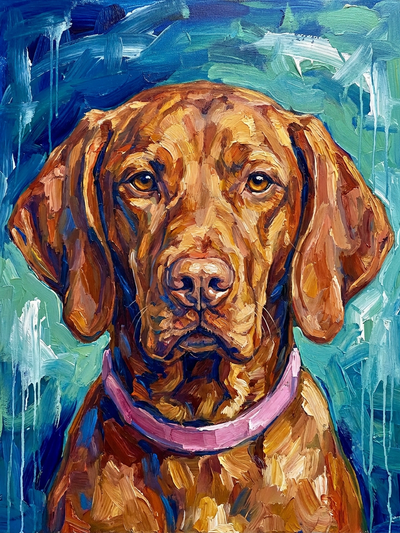
Red wheaten Ridgebacks — the darker, richer end of the colour range — produce the most striking oil painting results. The deep warm red of the coat, amplified by the painting tradition's natural tendency toward amber and ochre, creates portraits of great richness. The face, with its amber or brown eyes, is unified in warmth with the coat.
The smoothness and shortness of the Ridgeback coat means the portrait depends primarily on the body's structure and the face's expression rather than coat texture. A photo that shows the athletic build clearly, at eye level, gives the portrait its strongest foundation.
Recommended styles for Rhodesian Ridgebacks
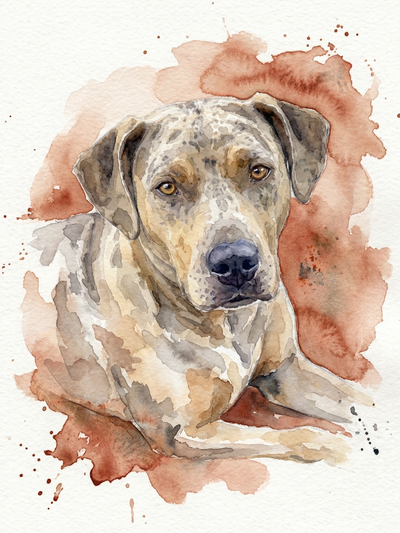
Oil Painting — amplifies the warm wheaten colour to its richest expression. Renaissance — the athletic bearing and calm confidence of the breed suit the formal tradition. Cinematic — the Ridgeback's physical presence and focused expression suit dramatic lighting. Watercolour — particularly beautiful for lighter wheaten coats. Safari Portrait — the breed's African origins and the style's setting create an obvious and powerful combination.
Photo tips
The Ridgeback's athletic build is as much a part of the portrait as the face, and a photo that includes the neck and chest — showing the muscular structure — produces a stronger portrait than a face-only shot. The smooth coat is best photographed in natural light from the side, which picks out the muscle structure without creating harsh shadows. The amber or brown eyes should be clearly lit — they are the warmest element in an already warm portrait.