
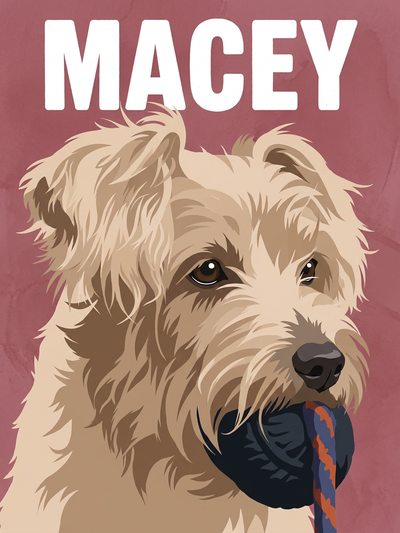
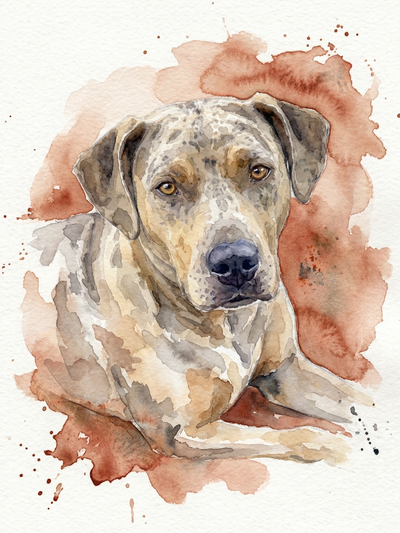
Persian cats carry themselves with the quiet certainty of a cat that has been painted by royalty. The long, dense coat, the flat face with its large round eyes, the unhurried dignity of movement - all of it makes the Persian one of the most naturally painterly breeds in the world. A Persian portrait done in the right style does not just document a cat; it produces something that looks as though it was commissioned for a drawing room wall.
Coat colours and how they render
Persian cats come in an extraordinary range of colours and patterns - solid, tabby, bicolour, pointed, shaded, and smoke varieties. The long, flowing coat catches light differently depending on colour, and each variant suits different portrait styles.
White Persians are the most classically regal - the pure white coat against the vivid copper or blue eyes creates portraits of extraordinary contrast. Oil painting handles white fur with warmth, while watercolour renders it with an almost translucent delicacy.
Silver and golden shaded Persians have a luminous quality - the lighter tips fading to darker roots creating a shimmering, three-dimensional depth to the coat. Impressionist and watercolour styles capture this tipping effect with real elegance.
Tabby Persians - particularly silver tabby - have complex pattern detail underneath the long coat that portrait styles with strong contrast handle well. Oil painting renders the tabby markings beneath the flowing fur with depth and warmth.
Colourpoint Persians combine the Persian body with pointed colouring - the contrast between the pale body and darker points suits watercolour and pastel styles particularly well.
Recommended styles for Persians
Old Masters Portrait - the Persian's regal bearing suits the formal gravity of this style above almost any other breed. Oil Painting - the long coat renders with extraordinary depth and warmth in oil. Watercolour - for white and silver Persians, watercolour produces portraits of rare delicacy. Impressionist - captures the soft, flowing quality of the coat beautifully. Victorian Portrait - the Persian is the quintessential Victorian cat and suits the style perfectly.
Photo tips
A well-groomed coat photographs - and portraits - far better than a matted or tangled one. Take the photo when the Persian is calm and settled, ideally on a surface that contrasts with the coat colour. The face of a Persian is best captured full-on or at a slight angle - the flat face and large eyes are the defining features of the breed and should be the focus. Natural light from a window works well for long-coated breeds, picking out the individual hairs and the flow of the coat without the harsh shadows of direct flash.