
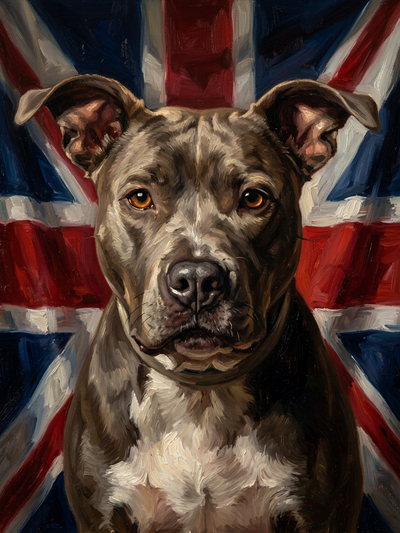
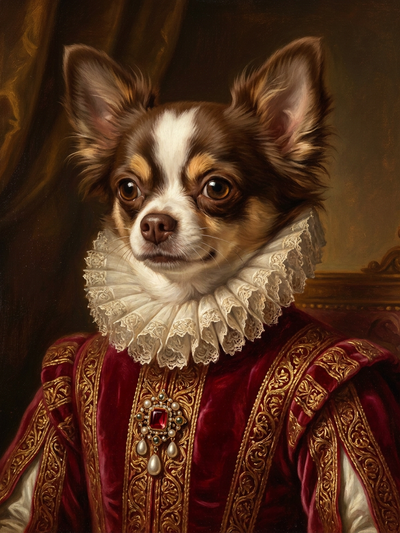
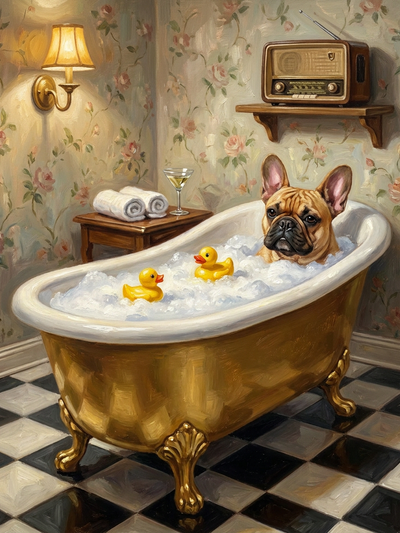
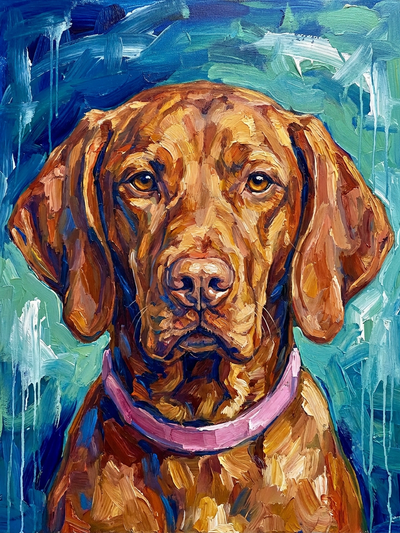
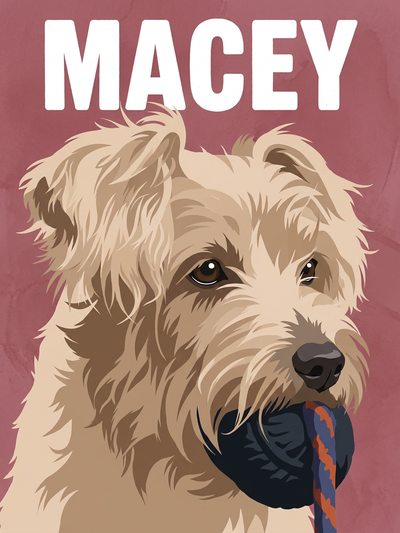
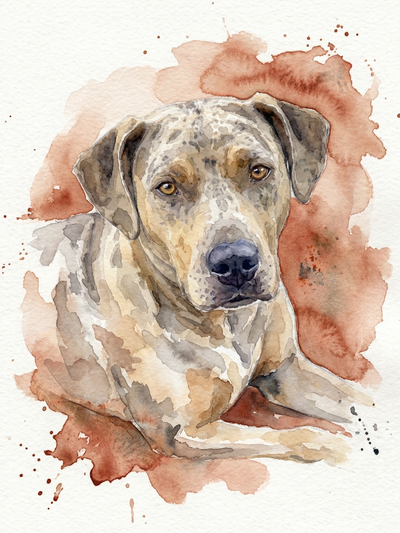
Newfoundlands are one of the largest dog breeds in the world and one of the gentlest. The combination of enormous physical size and extraordinary temperamental sweetness — the Newfoundland is famously patient, calm and devoted — gives the breed a quality that portrait art finds compelling: a face of great size and dignity that carries within it something unmistakably soft. A Newfoundland portrait on a wall has an immediate presence that smaller breeds cannot match, and the thick, double coat in its rich colouring gives portrait styles a great deal of visual richness to work with.
Coat colours and how they render
Newfoundlands come in black, brown, grey and Landseer (white and black). The coat is always thick, dense and moderately long, with a water-resistant outer layer and a dense, oily undercoat developed for cold-water swimming.
Black Newfoundlands are the most common and produce the most formal portrait results. In oil painting the deep black coat — so dense that it has a slight wave — creates a surface of dark richness against which the face emerges in warm highlights. The large, dark eyes provide the portrait's emotional focal point.
Brown Newfoundlands have a warm, rich coat that suits oil painting and watercolour particularly well. The deep chocolate brown in the painting tradition takes on a warmth that suits the breed's gentle character.
Landseer Newfoundlands — named after the painter Edwin Landseer who painted them frequently — have the bold black and white pattern that creates graphic portrait results. In oil painting the two-tone coat has a formal quality that suits the breed's large, dignified presence.
Grey Newfoundlands suit watercolour and impressionist styles with an atmospheric, cool-toned palette.
Recommended styles for Newfoundlands
Oil Painting — the strongest choice for all colours and the breed's grand scale. Old Masters — the scale and dignity of the breed suit the most formal tradition. Renaissance — the Newfoundland's gentle grandeur suits the formal portrait beautifully. Watercolour — particularly beautiful for brown and grey Newfoundlands. Sargent Portrait — the confident brushwork of the Sargent style suits the breed's physical confidence.
Photo tips
The scale of the Newfoundland creates the same photographic challenge as the Great Dane — getting down to eye level with a very large dog. A photo that includes the full head, neck and chest shows the breed's physical presence most clearly. The dense coat benefits from natural light that picks out the texture and depth of the double coat — bright artificial light can flatten the dark coat particularly. Newfoundlands drool and the portrait benefits from a photo taken at a moment when the face is dry and clean.