
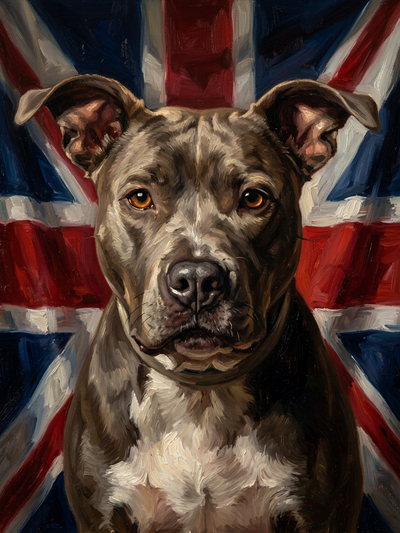
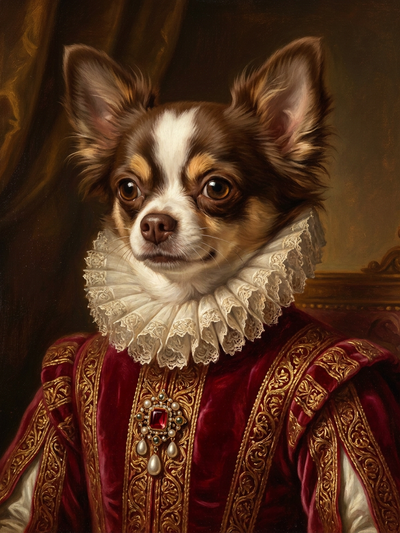
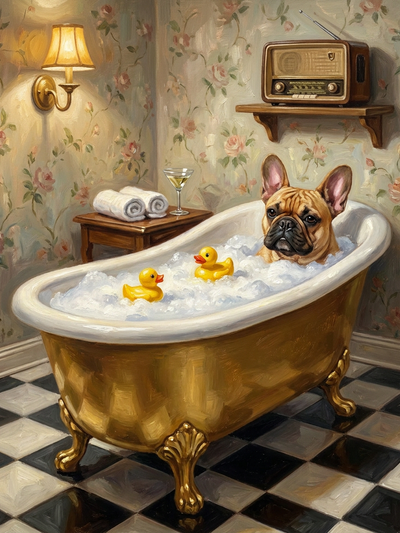
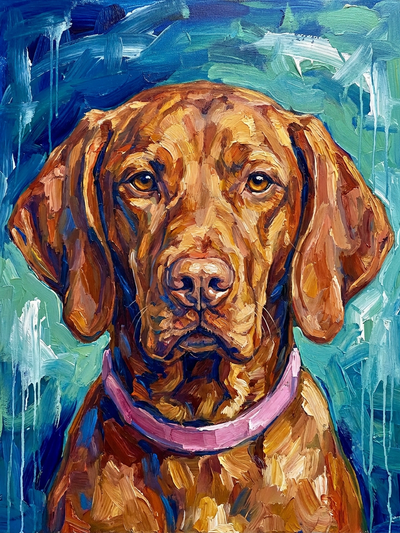
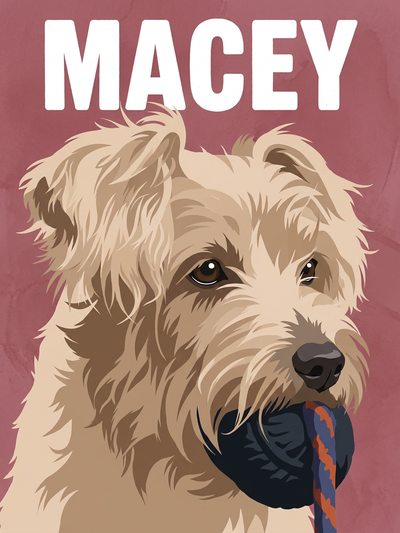
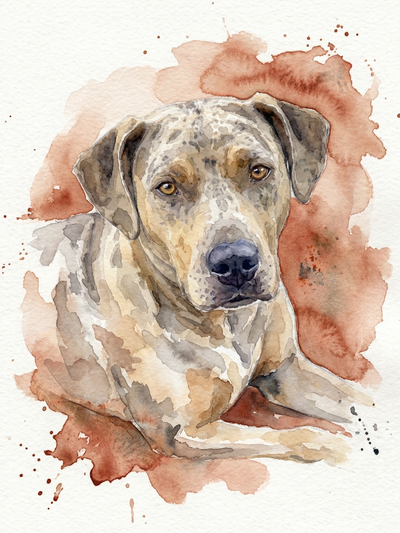
Mixed breed dogs are, in a very real sense, the most individual dogs in the world. Where a pedigree breed produces dogs that share a consistent appearance, a mixed breed is a combination that has never existed in exactly this form before and never will again. This individuality — the particular ears from one ancestor, the coat colour from another, the body shape that reflects three generations of unpredictable genetic combinations — is precisely what makes mixed breed portraits so satisfying. The portrait is not of a type. It is of this specific dog, in all their irreproducible particularity.
Coat colours and how they render
Mixed breed dogs come in every possible coat type, colour and combination. This variety means the portrait results span the full range of what Furcasso produces — from the formal drama of a dark-coated smooth dog in Old Masters style to the flowing warmth of a curly golden coat in watercolour.
The portrait style that works best for a mixed breed depends entirely on the individual dog rather than any breed-based generalisation. A dog with a short, smooth coat and strong body lines suits different styles from a dog with a long, textured coat and a gentle face. The free preview is particularly valuable for mixed breeds — trying two or three styles to see which best captures the individual dog is the most reliable approach.
Coat colour follows the same general principles as for pedigree breeds. Warm golden and amber tones suit oil painting and watercolour. Dark coats produce dramatic results in Old Masters and renaissance. Merle patterns suit watercolour. Brindle suits oil painting. What is unique about the mixed breed portrait is that the combination of these characteristics in one dog often produces results that are more interesting than any single-breed portrait — the unexpected combination of features creating a portrait with real individual character.
Recommended styles for mixed breeds
Oil Painting — the most versatile choice and the strongest for most coat types. Watercolour — particularly beautiful for lighter, softer-coated mixed breeds. Impressionist — handles coat texture variety with real depth. Sketch — captures the individual features of any dog in expressive line work. Renaissance — the formal tradition gives any dog the dignity of a proper portrait.
Photo tips
The most important thing in a mixed breed portrait photo is capturing what makes your specific dog individual — the features that make them immediately recognisable to you. A photo that shows the face clearly, at eye level, with the dog's most distinctive features visible and well lit is the best starting point. Mixed breeds can have unusual combinations of features that create photographic challenges — a dog with very dark eyes in a dark coat, or a face where light and dark areas sit close together — and natural light from the front is the most reliable solution to most of these challenges.