
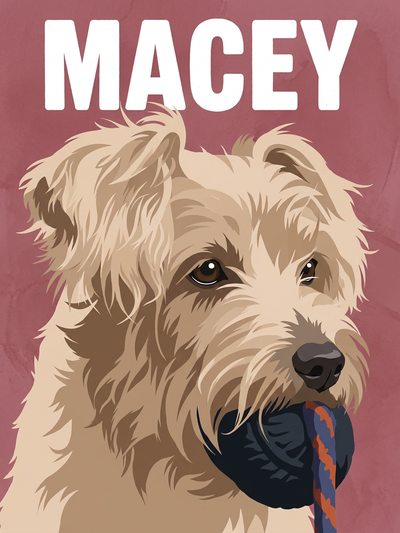
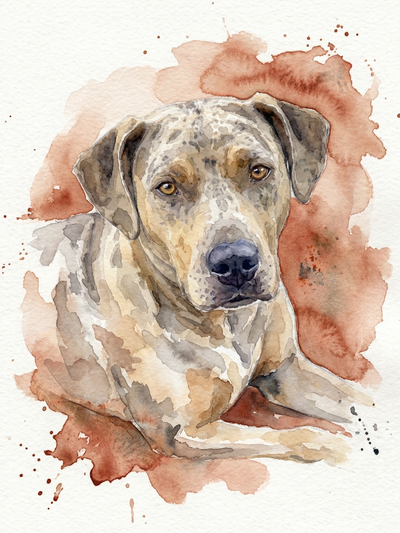
The Maltese is one of the oldest companion dog breeds in the world. Ancient Greek and Roman writers described them. They appear in the paintings of Titian and Goya. For two millennia the breed has been in rooms where beautiful things were kept and valued, and the long, silky white coat that has defined them throughout has always been something that visual art finds compelling. A Maltese portrait is not a new idea. It is a very old one, made newly available to everyone who has one.
The white coat in portrait art
The Maltese coat is almost entirely white — occasionally with lemon or tan markings on the ears — and the portrait results depend less on colour variation than on the texture and length of the coat and the quality of the light in the source photo.
In oil painting the white coat presents an interesting challenge: white in oil painting is not simply absence of colour but a surface that catches and reflects every surrounding tone. A well-executed Maltese oil painting portrait has a coat that picks up warm golden light from one direction and cool shadow from another, creating a surface of unexpected complexity.
In watercolour the white coat requires restraint — the style's tendency to add tone can easily overwhelm the brightness of the white. When it works, a Maltese in watercolour has a delicacy and luminosity that is quite unlike any other coat colour in the style.
Impressionist and pastel styles suit the Maltese well because their natural tendency toward soft, diffused light complements the clean white coat without flattening it.
Recommended styles for the Maltese
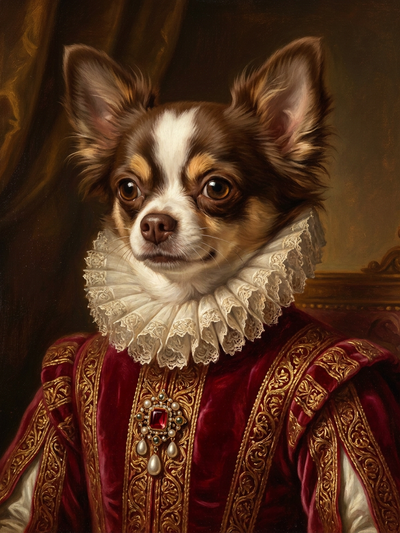
Oil painting is the historical portrait tradition and the most demanding choice, but produces the most striking results when the source photo is good. Watercolour is delicate, luminous and suits the breed's elegant character. Pastel is the softest style for the softest coat. Renaissance fits the breed's ancient aristocratic history within the formal portrait tradition. Impressionist handles the white coat with a quality of light that no other style quite matches.
Photo tips
White coats are the most photographically demanding of any coat colour. The most common problem is overexposure — the camera's metering tries to render the white coat as middle grey, either blowing out the coat detail or underexposing the face. In natural window light, slightly overriding the camera's auto-exposure to protect the coat detail produces the best source material. Avoid flash entirely — it creates a flat, featureless white that gives the portrait nothing to work with. A slightly shaded outdoor setting, away from direct sunlight, often produces the best results.