
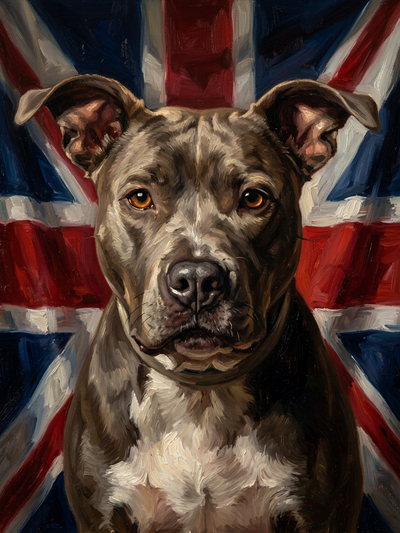
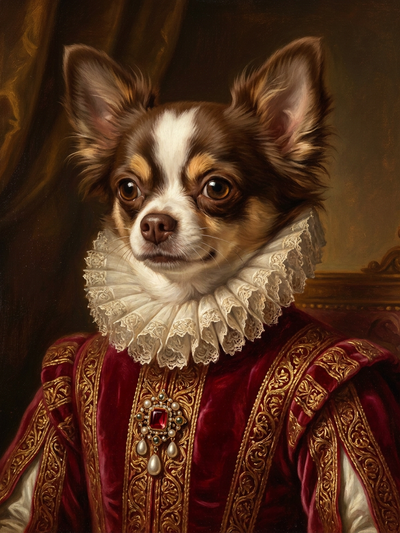
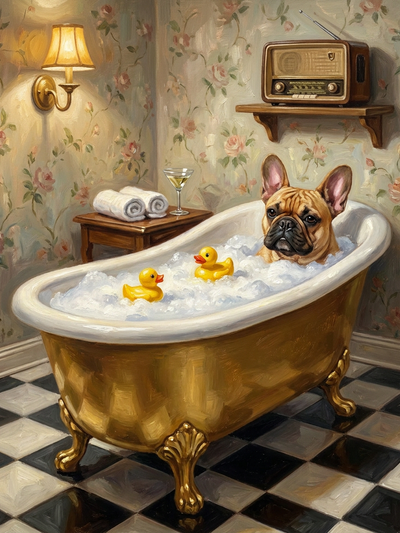
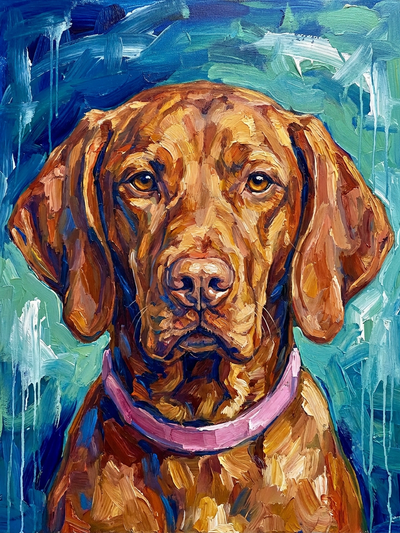
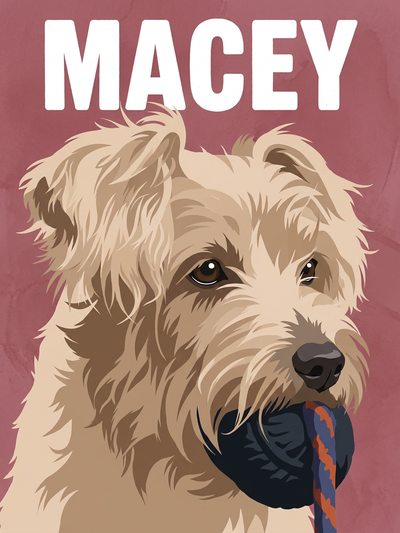
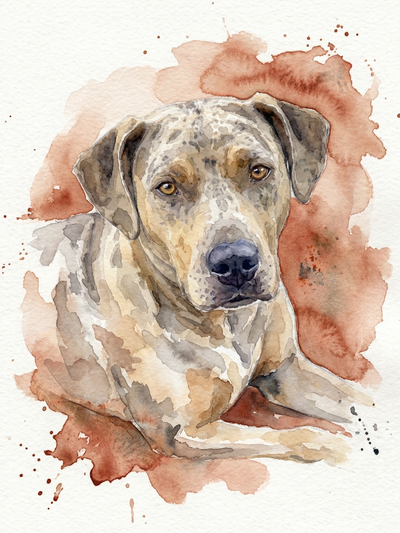
The Leonberger was deliberately bred to resemble a lion — the breed's founder, Heinrich Essig of Leonberg, Germany, wanted to create a dog that looked like the lion on the town's coat of arms. The result is a dog of spectacular size with a distinctive lion-like mane around the neck and chest, a warm golden to reddish-brown coat and a black mask that frames the large, gentle face. Portrait styles respond to the Leonberger with enthusiasm — the scale, the mane and the remarkable combination of grandeur and gentleness make the breed one of the most compelling large-dog portrait subjects available.
Coat colours and how they render
Leonbergers always have a warm coat — ranging from golden yellow through to reddish-brown and sand — with the characteristic black mask and a mane that varies in fullness between individuals. The coat is medium to long, with a profuse mane on the chest and neck and feathering on the legs and tail.
Golden yellow Leonbergers produce oil painting results of great warmth. The long warm coat in the painting tradition takes on amber and gold tones that suit the lion association the breed was created to embody. The mane, catching the light differently from the body coat, creates a natural compositional focal point.
Red-brown Leonbergers have a richer, deeper coat colour that suits oil painting and impressionist styles with particular warmth. The deeper tones in these styles have a quality of gravitas that suits the breed's size and dignity.
The black mask is always a defining portrait feature — framing the large, gentle face and creating a natural tonal contrast against the warm coat. In formal portrait styles the mask gives the face a structured, dramatic quality.
Recommended styles for Leonbergers
Oil Painting — the most natural choice for the breed's lion-like warmth and grandeur. Renaissance — a breed created to look like royalty's lion suits the formal portrait tradition. Old Masters — the scale and dignity of the Leonberger suit the most formal tradition. Impressionist — the long flowing coat and warm colours suit the loose brushwork of this style. Royal Portrait — the Leonberger's deliberate association with heraldic imagery suits the royal style.
Photo tips
The mane is the Leonberger's most distinctive portrait feature and should be shown in full. A photo where the dog is sitting upright with the chest and neck visible gives the mane its greatest prominence. The black mask should be clearly defined — natural front-facing light picks out the contrast between the dark mask and the warm coat around it. The scale of the dog means a slight distance is sometimes necessary to include the head and mane in the frame — cropping too close loses the mane volume that makes the breed visually distinctive.