
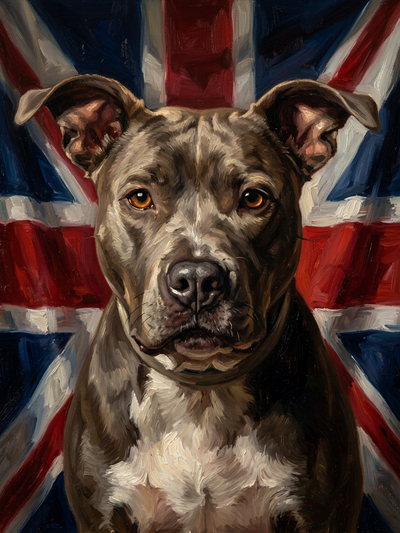
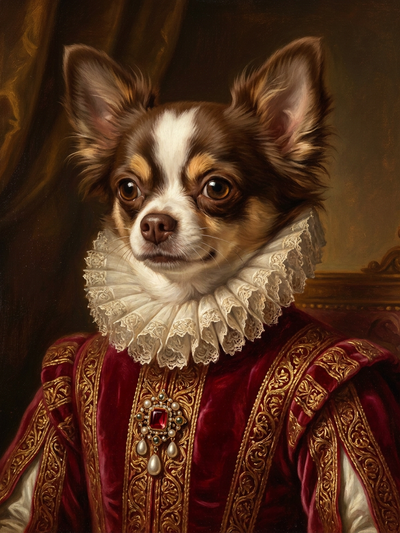
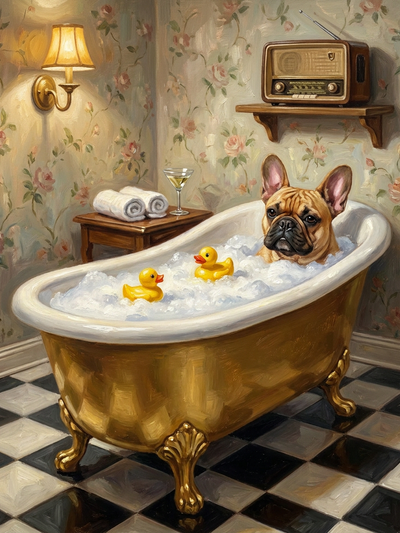
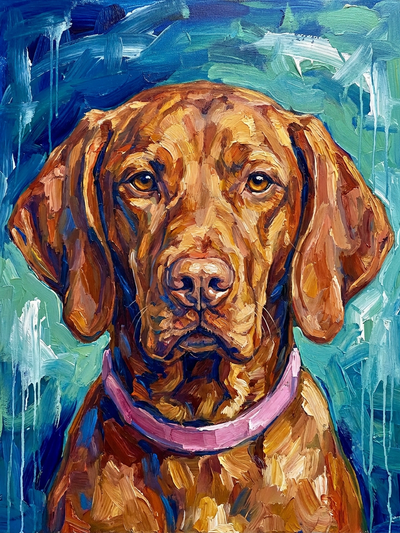
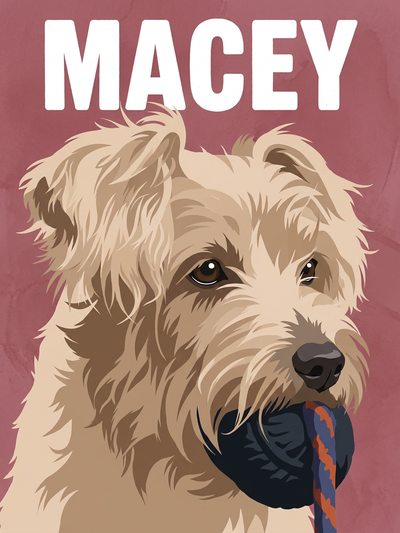
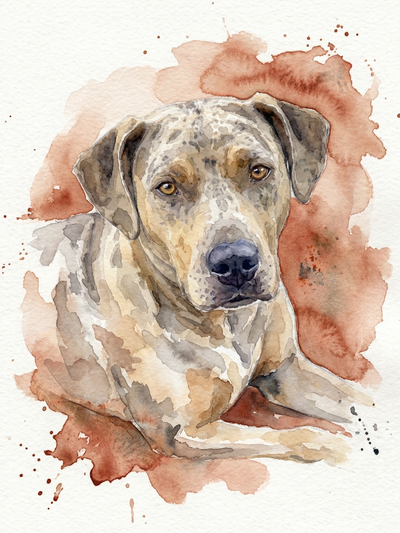
Great Danes have a scale that photographs struggle to convey and portraits embrace. The sheer physical presence of the breed — the long elegant neck, the deep chest, the noble head held high — is something that the portrait tradition, with its long history of rendering large and significant subjects, handles more naturally than a phone camera does. A Great Dane portrait gives the breed the scale and gravitas it carries in real life, and the results are consistently among the most impressive that Furcasso produces.
Coat and colour
Great Danes come in a wide range of colours and patterns: fawn, brindle, blue, black, harlequin, mantle and merle being the most common. Each produces distinctive portrait results.
Fawn Great Danes — the golden-fawn with black mask that is perhaps the most classic colour — suit oil painting and renaissance particularly well. The warm coat and the formal structure of the breed create portraits of genuine grandeur.
Brindle Great Danes have the dark striping over a fawn base that oil painting renders with particular depth. The large canvas of the Dane's body gives the brindle pattern room to develop in a way that smaller breeds cannot offer.
Blue Great Danes — the steel grey-blue — produce striking watercolour and impressionist results. The cool tone of the coat sits interestingly against the warm palette of traditional portrait styles.
Harlequin Great Danes — white with irregular black patches — produce the most graphic portrait results. In pop art and screen print the bold irregular patches create an immediately striking image. In oil painting the harlequin pattern has a quality of formal drama.
Merle Great Danes have a mottled, complex coat pattern that watercolour handles with natural affinity — the flowing quality of the medium mirrors the irregularity of the pattern.
Recommended styles for the Great Dane
Oil painting conveys the scale and presence of the breed best. Renaissance fits the breed's aristocratic bearing. Watercolour is particularly strong for blue and merle Great Danes. Old Masters suits the Great Dane whose expression carries the weight of their considerable physical presence. Pop art is bold and striking for harlequin Great Danes specifically.
Photo tips
The scale of a Great Dane creates a specific photographic challenge — fitting the full body in the frame at eye level. Getting down to the dog's eye level is essential but physically demanding given the breed's height. A photo that includes the head, neck and chest — even if the full body is not shown — gives the portrait the elements it needs to convey the breed's scale and presence. The long neck and noble head are the most important features and should be clearly visible in natural light.