
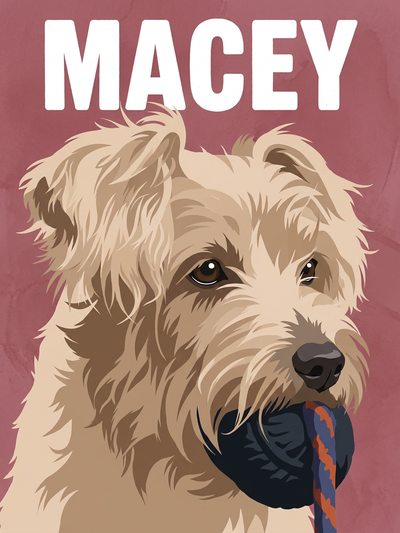
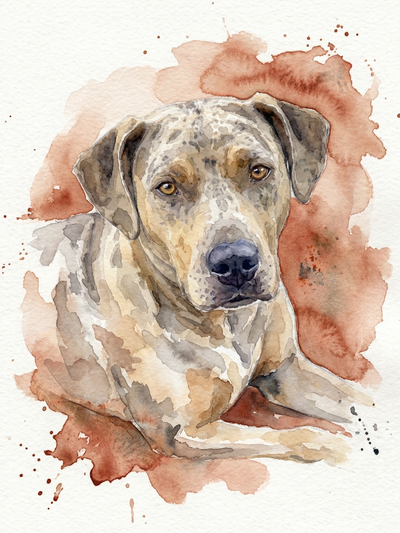
Flat-Coated Retrievers are described by their owners and breeders as the dog that never quite grows up — the exuberant, joyful, endlessly enthusiastic character of the breed persists well into adulthood in a way that most breeds do not maintain. The glossy black or liver coat, the long fine head, the feathering on the legs and tail and the expression of unconditional enthusiasm make the Flat-Coat a portrait subject with a quality of animated warmth that portrait styles capture well. A Flat-Coat portrait has an energy to it that more placid breeds sometimes lack.
Coat and colour
Flat-Coated Retrievers come in two colours only: black and liver. The coat is always flat, dense and medium length with feathering on the legs, chest and tail. The coat has a natural sheen that gives it a glossy quality in good light.
Black Flat-Coated Retrievers produce portrait results of great formal depth. In oil painting and Old Masters the glossy black coat has a sheen that catches warm reflected light at the coat's highest points — the top of the head, the shoulders, the cheeks — while the recesses hold deep shadow. The long, fine head and the feathering around it give the portrait an elegance that distinguishes the Flat-Coat from other black dogs.
Liver Flat-Coated Retrievers have a warm, rich coat that suits oil painting and watercolour particularly well. The glossy quality of the liver coat in the painting tradition creates portraits of warm richness. The feathering on the ears and chest catches the light differently from the body coat and gives the portrait texture and depth.
Recommended styles for the Flat-Coated Retriever
Oil painting — the glossy coat and the natural sheen give this style a great deal to work with. Old Masters is particularly striking for the black variety. Impressionist — the feathering and the coat's natural movement suit the loose brushwork. Renaissance suits the long, elegant head in the formal portrait tradition. Watercolour is particularly beautiful for the liver variety.
Photo tips
The glossy coat of the Flat-Coated Retriever is best captured in natural light that picks out the sheen without creating harsh reflective highlights. Bright direct sunlight can create overexposed patches on the glossy coat — slightly shaded natural light gives the most accurate colour and shows the coat's depth. The long, fine head should be clearly visible and well lit. The feathering on the ears, chest and legs adds to the portrait's elegance and should be visible in the source photo.