
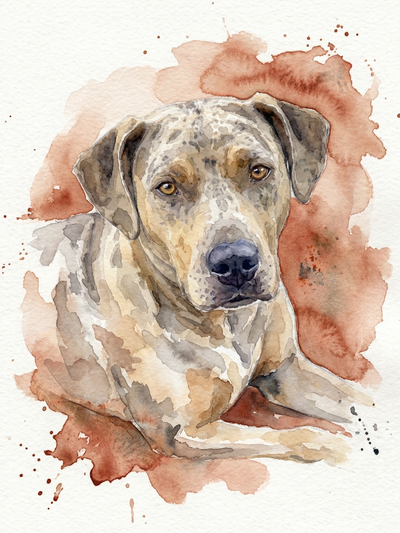
No two Dalmatians have the same spots, and this is not a minor detail — it means that every Dalmatian portrait is genuinely unique in a way that portraits of other breeds are not. The spot pattern of a specific Dalmatian is as individual as a fingerprint, and the portrait captures it specifically and permanently. A Dalmatian portrait made from your dog's photo is the only portrait of those particular spots that will ever exist.
Coat and colour
Dalmatians come in two base colours: black and white, and liver and white. In both cases the ground is white and the spots are the defining visual element.
Black and white Dalmatians produce the most graphic portrait results. In pop art and screen print the high contrast of the black spots on white creates an image of immediate visual impact. In oil painting the spots create an unusual surface complexity — the black patches and white ground catching light differently and creating a coat of real visual interest at close range.
Liver and white Dalmatians have a warmer, softer palette. The brown-liver spots on white suit watercolour and impressionist styles well — the warm tones of the spots picking up the amber quality of these styles' palettes.
The density and distribution of the spots varies significantly between individual dogs — some have heavy, closely packed spotting, others have sparse, widely distributed spots. Both produce interesting portrait results but in different ways — heavy spotting creates more graphic, pattern-dominant portraits, sparse spotting allows the body structure and face to read more clearly through the coat.
Recommended styles for the Dalmatian
Pop art suits the graphic quality of the spot pattern perfectly. Oil painting finds depth and complexity in what appears a simple pattern. Watercolour is particularly strong for liver and white Dalmatians. Screen print translates the bold spots naturally. Impressionist interprets the spots breaking up the coat surface with real interest.
Photo tips
The spot pattern is the defining feature and the source photo should show it clearly. A photo where the full body is visible — not just the head — allows the portrait to capture the distribution and density of the spots across the whole dog. Natural light from above-front picks out the spots most clearly without creating shadows that obscure them. The face markings — spots on the muzzle, around the eyes — should be clearly visible for the portrait to capture the individual dog's identity accurately.