
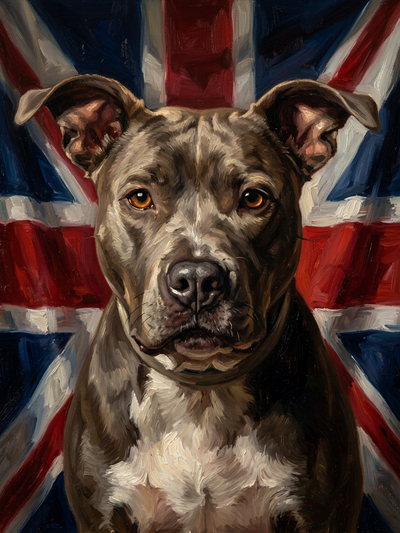
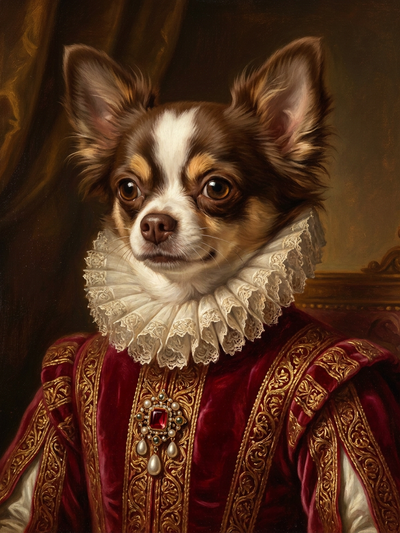
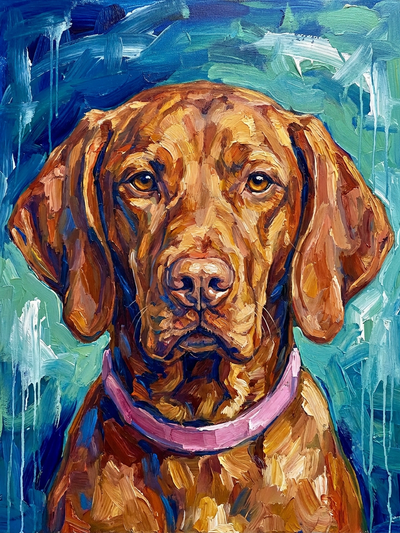
The Bull Terrier has the most immediately recognisable head of any dog breed — the long, egg-shaped skull curving down from the flat top to the end of the muzzle in one unbroken line, the small triangular eye set high in the skull, the expression that combines determination with a quality of sideways humour that is uniquely the breed's. Portrait artists find the Bull Terrier a compelling subject precisely because of these unconventional features. The face does not follow the rules of conventional canine proportion, and the portrait that captures it accurately is always something people stop to look at.
Coat colours and how they render
Bull Terriers come in white and in a range of colours including brindle, red, fawn, black and tricolour. White Bull Terriers — the classic variety — may have coloured markings on the head. Coloured Bull Terriers have a short, flat coat that shows the breed's muscular structure clearly.
White Bull Terriers with head markings produce some of the most graphically striking portrait results. In pop art and screen print the bold dark marking against the white coat, combined with the distinctive head shape, creates an image that is immediately iconic. In oil painting the white coat picks up the warm and cool tones of the surrounding light and the dark marking creates the portrait's anchor.
Brindle Bull Terriers produce oil painting results of particular interest. The striped pattern in the short coat creates subtle surface complexity that the layered tonal approach of oils renders well, and the distinctive head shape gives the portrait a strong silhouette that style choices cannot obscure.
Red and fawn Bull Terriers have warm, even coats that suit oil painting and renaissance well. The warmth of these colours sits naturally in the painting tradition and the breed's distinctive head shape creates a portrait with real visual character.
Recommended styles for Bull Terriers
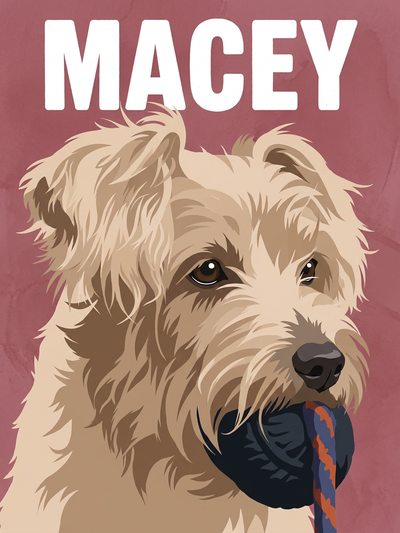
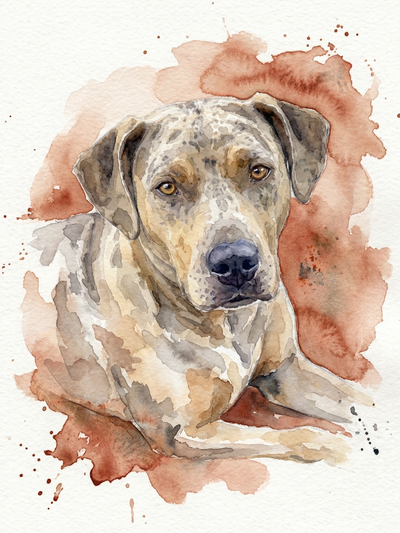
Pop Art — the distinctive head shape and bold markings create iconic results. Oil Painting — handles all coat colours with depth and suits the breed's muscular structure. Sketch — the distinctive head shape translates powerfully into expressive line work. Classic Cartoon — the breed's naturally comic quality suits the cartoon tradition well. Renaissance — the formal tradition applied to such an unconventional face creates interesting tension.
Photo tips
The distinctive head shape is the defining portrait feature of the Bull Terrier and the source photo should show it clearly. A slight three-quarter angle, showing the unbroken curve from skull to muzzle, captures what makes the breed unique better than a full front-on shot. The small triangular eye should be clearly visible — both eyes if possible. Natural light from the front picks out the head structure clearly without creating deep shadows that obscure the profile.