
The Bloodhound has the most acute sense of smell of any animal — capable of following a scent trail that is weeks old over vast distances. The physical features that support this extraordinary ability are the same features that make the breed such a compelling portrait subject: the long pendulous ears that funnel scent toward the nose, the deep loose skin around the face and neck that traps scent particles, and the wrinkled brow that gives the breed its characteristic expression of profound, slightly mournful contemplation. A Bloodhound carries the architecture of its purpose in its face, and the portrait that captures this architecture captures something genuinely remarkable.
Coat and colour
Bloodhounds come in three colours: black and tan, liver and tan, and red. All have the characteristic wrinkled face, long ears and loose skin. The coat is always short, dense and hard to the touch.
Black and tan Bloodhounds produce the most dramatic formal portrait results. In oil painting and Old Masters the deep black saddle against the rich tan of the face and legs creates a portrait of great tonal structure. The wrinkled face, picked out by the directional light of these styles, is the portrait's emotional centre.
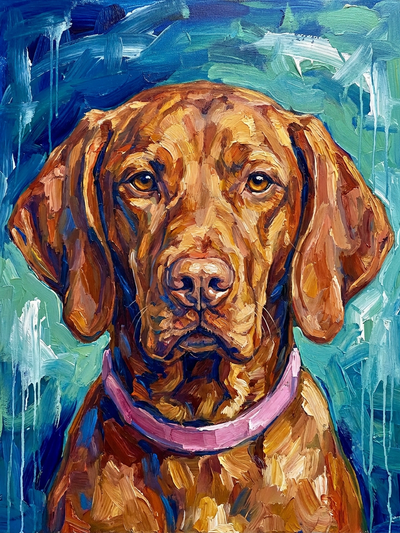
Liver and tan Bloodhounds have a warmer, softer palette. The warm chocolate-liver against the amber tan suits oil painting with a quality of warmth that matches the breed's deep, thoughtful character.
Red Bloodhounds — where the coat is a uniform warm red — produce oil painting results of great warmth and simplicity. The even warm colour focuses all attention on the extraordinary face.
Recommended styles for the Bloodhound
Oil painting finds the tonal depth in the wrinkled face structure across all colour combinations. Old Masters amplifies the profound expression of the breed to its most formal statement. Renaissance suits the breed's ancient history in the formal portrait tradition. Noir — the wrinkled, mournful expression and the atmospheric quality of the noir style were made for each other. Vintage suits the Bloodhound's long history as a working scent hound with the warmth of the vintage tradition.
Photo tips
The wrinkled face and the long pendulous ears are the defining portrait features of the Bloodhound. Natural front-facing light picks out the wrinkle structure most clearly — the peaks and valleys of the loose facial skin catching the light and creating the tonal variation that the portrait builds from. Both ears should be visible, hanging naturally. The Bloodhound's characteristic expression of dignified melancholy is best captured when the dog is settled and calm — a relaxed, seated Bloodhound photographed at eye level in natural light gives excellent results.