
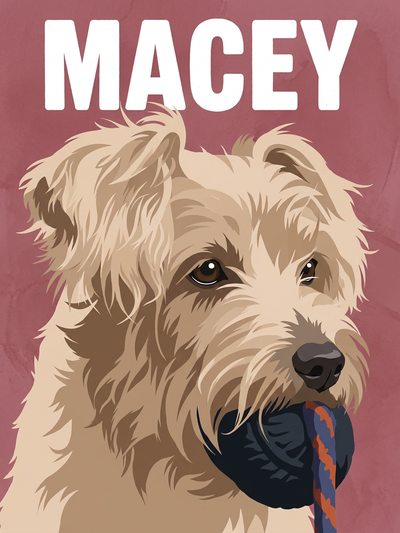
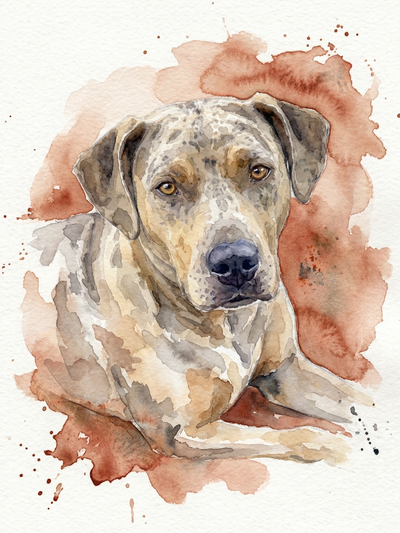
The Bichon Frise has a coat so consistently white and so uniformly fluffy that it looks, at first glance, less like a dog than a particularly cheerful cumulus cloud. This quality — the soft, powder-puff coat, the dark round eyes looking out from a frame of white curls, the expression of uncomplicated happiness — gives the breed an almost painterly quality before any paint has been applied. Portrait styles that work with softness and light find the Bichon an unusually cooperative subject.
Coat and colour
The Bichon Frise coat is almost always white, occasionally with cream or apricot tints particularly around the ears, and the portrait result depends almost entirely on the quality of the light in the source photo and the length and condition of the coat.
In watercolour the white coat presents a surface that the style handles with particular skill when the source lighting is good — the loose washes suggesting the three-dimensional quality of the curl without trying to resolve every strand. The result has a softness that matches the breed's character well.
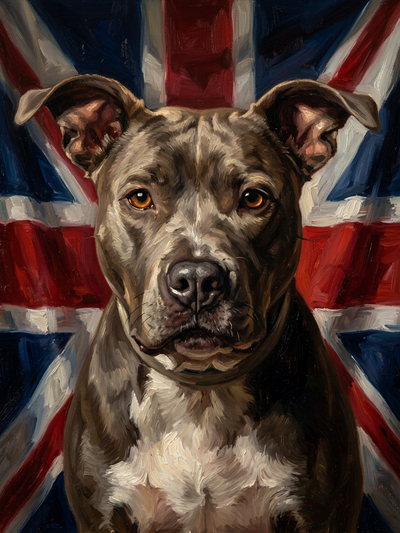
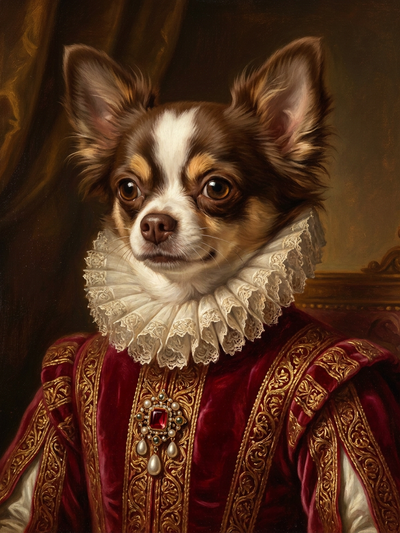
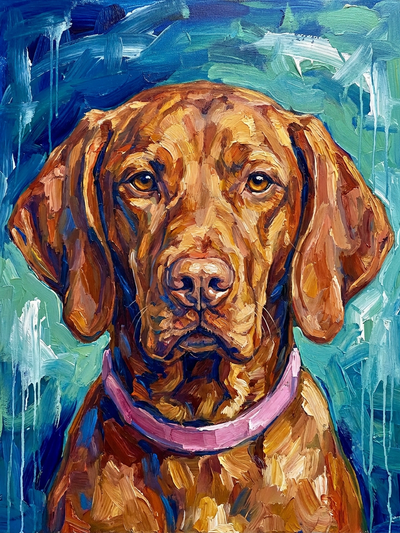
In oil painting the white coat catches the warm amber tones of the painting tradition and the cool shadows of its darks, creating a surface of unexpected tonal variety. The dark eyes against the white coat create the portrait's focal point and the rest builds around them.
Pastel and aquarelle styles suit the Bichon's soft character particularly well. The delicate touch of these styles complements the breed without imposing dramatic tonal contrasts that would feel at odds with its nature.
Recommended styles for the Bichon Frise
Watercolour is the most natural choice for the Bichon's soft white coat. Pastel suits the breed's cheerful, gentle character. Oil painting produces surprising depth from what appears a simple white coat. Botanical sets the white coat against rich botanical colour for striking contrast. Chibi suits the round face and fluffy coat very naturally.
Photo tips
White coats require photographic care. Avoid flash entirely — it creates a flat featureless white with no texture for the portrait to work with. Natural window light on an overcast day gives the best tonal range in the coat. The curly texture of the Bichon coat is best captured when the coat is freshly groomed and dry. A slightly shaded outdoor setting away from direct sunlight often produces the cleanest results.