
Bernese Mountain Dogs have a coat that portrait art responds to with something close to enthusiasm. The thick, silky tricolour — jet black with rich rust and clear white markings in a pattern so consistent and so well-defined that it looks almost painted — gives the portrait a strong compositional foundation before anything else has been decided. Add the large, gentle face with its warm dark eyes and the natural calm of the breed, and you have a portrait subject that the oil painting tradition in particular seems designed for.
Coat and colour
The Bernese Mountain Dog coat follows a consistent tricolour pattern: jet black body coat, rich rust markings on the face, chest and legs, and white markings on the face blaze, chest and paws. The pattern is the same across all Berners but varies in its exact boundaries and in the richness of the rust and white tones between individuals.
In oil painting the tricolour coat creates a portrait of exceptional depth. The black coat grounds the composition, the rust markings carry the warmth of the painting tradition, and the white markings provide brightness and relief. The three tones work together in a way that gives the oil painting style a natural tonal structure to build on.
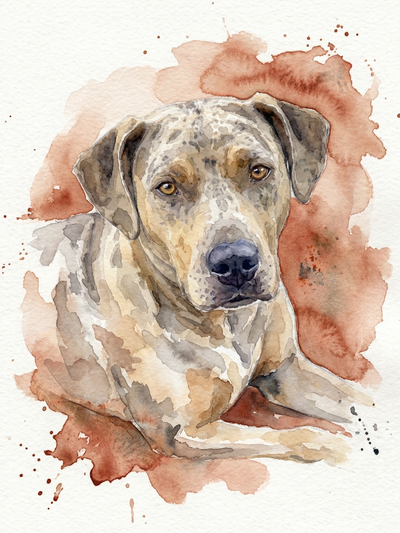
In watercolour the same tricolour structure is present but softer — the edges between colours blending slightly in the loose wash of the medium, and the overall effect being gentler and more atmospheric. The thick silky coat has a texture that watercolour suggests rather than resolves, and the result is a portrait with a quality of warmth that matches the breed's character.
Impressionist style handles the thick coat's texture particularly well. The loose brushwork suggests the depth and movement of the long outer coat without trying to render each strand, and the tricolour pattern provides a natural compositional rhythm for the style to follow.
Recommended styles for the Bernese
Oil painting is the natural choice for the tricolour coat and the formal bearing of the breed. Watercolour is softer and more personal, suiting the gentle character of the breed. Impressionist handles the thick coat texture with real affinity. Renaissance suits the Berner's natural gravity and the richness of the tricolour. Old Masters works for the Bernese whose face carries the gentle wisdom of the breed at its best.
Photo tips
The white blaze on the Bernese face — the clear white marking running from the top of the skull down to the nose — is a defining feature of the breed and should be clearly visible in the source photo. A photo taken at eye level with good natural light from the front picks out the blaze clearly and shows the full tricolour pattern at its best. The thick coat has depth that photographs best in natural light — bright artificial light can flatten the tonal variation in the black coat and make it look less rich than it is.