
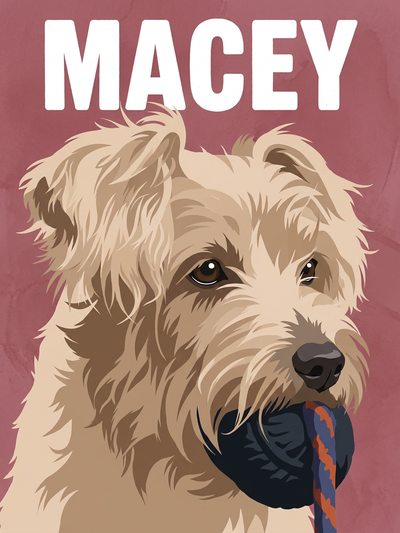
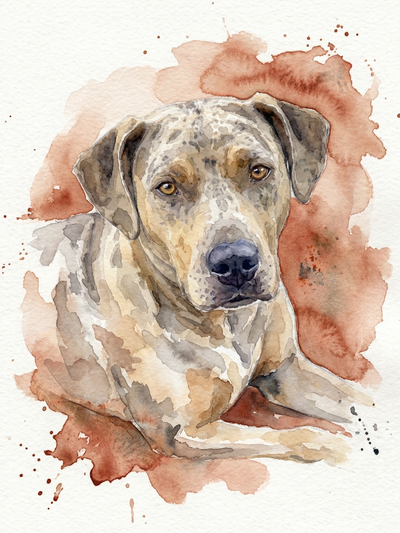
Basset Hounds have an expression that portrait art has always understood — a quality of thoughtful melancholy that sits behind the long drooping ears, the deep-set eyes, the heavy jowls and the general impression of a dog carrying the weight of considerable inner life. The face rewards attention in a way that more cheerful expressions sometimes do not, and a Basset Hound portrait that captures this quality — the particular combination of dignity and gentle sadness that the breed wears so naturally — produces something that people find themselves returning to.
Coat colours and how they render
Basset Hounds are typically tricolour — black, tan and white in the classic lemon and white or red and white patterns — with a short, dense, weather-resistant coat. The long body, short legs and pendulous ears are as defining as the coat colour in portrait terms.
Tricolour Basset Hounds have the classic three-zone colour structure that oil painting handles with particular depth. The black saddle, warm tan and white base each catch the light differently and the portrait has a natural tonal variety that builds structure around the expressive face.
Lemon and white Bassets have a warmer, softer palette. The pale lemon-tan against white suits watercolour and pastel styles well — the softness of these styles matching the gentle character beneath the mournful expression.
Red and white Bassets have the warmest coat tones and suit oil painting and renaissance particularly well. The rich red against white creates a strong tonal contrast that the portrait tradition handles naturally.
Recommended styles for Basset Hounds
Oil Painting — the natural choice for the tricolour and red and white patterns. Watercolour — suits lemon and white Bassets and the breed's gentle character. Vintage — the Basset's old-world, unhurried character suits the warmth of the vintage style perfectly. Renaissance — the gravitas of the breed's expression suits the formal tradition. Noir — the drooping eyes and melancholy expression suit the atmospheric quality of the noir style.
Photo tips
The ears are the Basset Hound's most distinctive feature and must be visible in the source photo — hanging naturally on both sides of the face, not folded back or raised. The drooping eyes and heavy jowls are best captured at eye level, which shows the full drama of the facial structure. Basset Hounds move slowly enough that burst mode is rarely necessary — a calm, settled photo taken in natural light usually gives excellent results. The ears trail along the ground during movement and pick up dirt that can affect the portrait — a clean dog after grooming produces the best source material.