
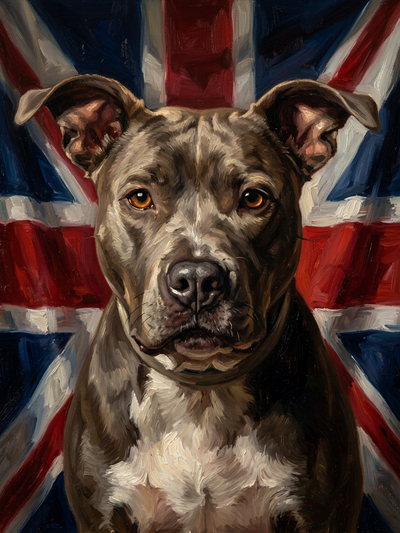
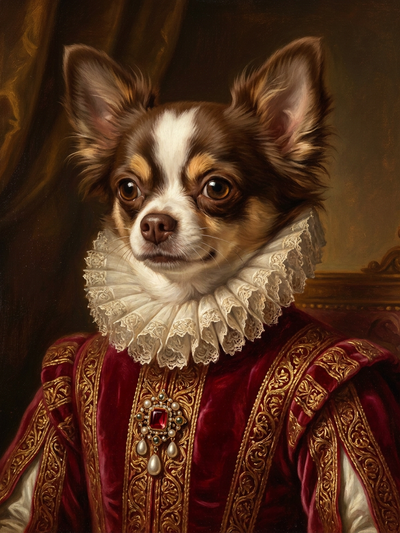
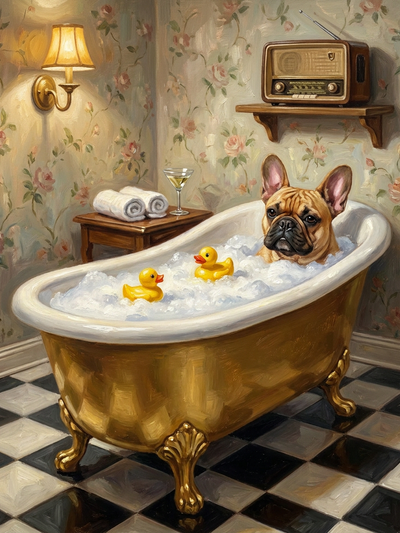
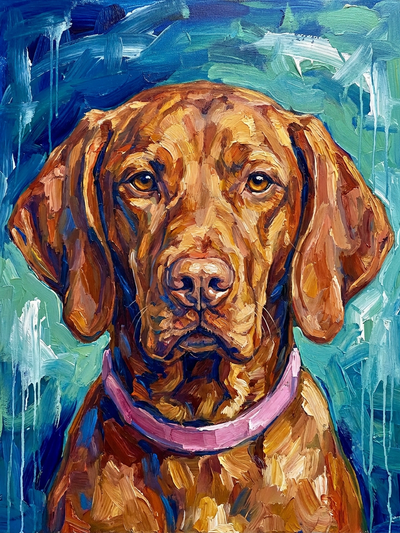
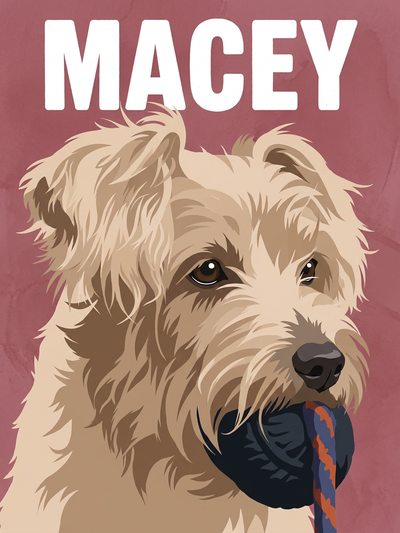
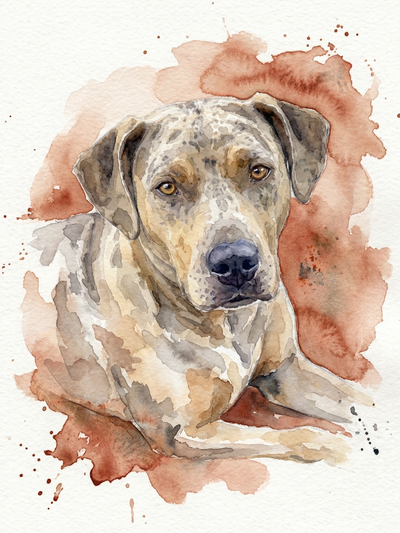
The Alaskan Malamute is one of the oldest Arctic sled dog breeds, developed by the Mahlemut Inuit people of Alaska and shaped over thousands of years by the demands of survival in one of the harshest environments on earth. The result is a dog of remarkable physical presence — the thick double coat, the powerful build, the wolf-like face with its characteristic cap and mask markings — that carries its working heritage in its appearance. Portrait styles that work with powerful physical presence and dramatic coat patterns find the Malamute an exceptionally compelling subject.
Coat and colour
Alaskan Malamutes come in a range of colours — light grey through intermediate shadings to black, sable and shadings of sable to red — always with white on the underbody, parts of the legs, feet and face markings. The coat is always the same: a thick, coarse outer coat and a dense, oily, woolly undercoat that insulates against Arctic cold.
Grey and white Malamutes — the most common and most recognisable colour — produce portrait results of dramatic tonal contrast. The grey cap and body markings against the white face and underbody create a natural compositional structure that oil painting and renaissance handle with real presence.
Black and white Malamutes have the highest tonal contrast in the breed range. In Old Masters and oil painting the deep black markings against white create portraits of great formal drama.
Sable and red Malamutes have the warmest coat tones. The sable shading — brown-red overtones on a grey or black base — produces oil painting results of unusual warm complexity.
The characteristic face markings of the Malamute — the cap over the head, the bar or mask on the face and the goggles around the eyes — are defining portrait features that vary between individuals and give each Malamute portrait its individual identity.
Recommended styles for the Alaskan Malamute
Oil painting is the strongest choice for all colour combinations. Old Masters suits the dramatic tonal contrast of black and white Malamutes. Renaissance suits the powerful, dignified bearing in the formal portrait. Viking Warrior — the Arctic working heritage and the wolf-like appearance make this an obvious and powerful choice. Winter is Coming — a breed shaped by Arctic winters suits this style completely.
Photo tips
The face markings — cap, mask or goggles — are the defining individual features of a Malamute portrait and must be clearly visible in the source photo. Natural front-facing light shows these markings most clearly against the white face. The thick coat benefits from natural light that picks out the texture and depth of the double coat layers. The powerful build is worth including — a standing pose shows the breed's physical presence more completely than a sitting or recumbent one.