
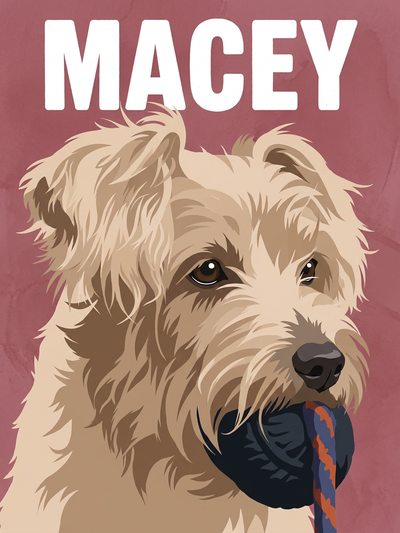
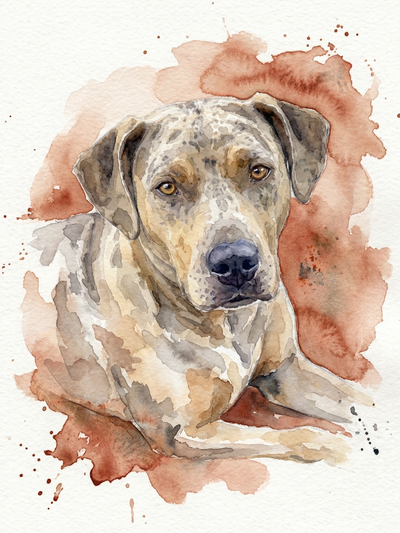
The Akita is one of Japan's national treasures — literally designated as a natural monument in its home country — and the breed carries this status in its bearing. The broad, bear-like head, the small triangular eyes with their expression of calm authority, the thick double coat and the curled tail — these are features of a dog that has been considered worth preserving and celebrating for centuries. In Japan, giving someone a small Akita statue is a gesture of good health, happiness and long life. A portrait of an Akita is a continuation of this tradition of honouring the breed visually.
Coat colours and how they render
Akitas come in a range of colours including red, brindle, white and sesame, with the characteristic white markings on the sides of the muzzle, cheeks, neck, chest, body and tail — known as urajiro — being a defining feature across all colours.
Red Akitas — the most common colour — produce oil painting results of exceptional warmth. The rich red coat with white urajiro creates a two-tone portrait with a natural compositional structure — the warm red body and the bright white markings providing contrast without complexity.
Brindle Akitas have a striped coat of subtle visual interest. In oil painting the brindle pattern in the dense double coat creates depth within what appears a simple colour.
White Akitas are the most dramatic in formal portrait styles. In renaissance and Old Masters the pure white coat against a dark background creates a portrait of striking presence — the broad powerful head framed in white emerging from darkness.
Sesame Akitas — where the coat has a mix of red, black and white hairs — produce impressionist results of real atmospheric quality. The mixed tones in each hair give the style's loose brushwork a great deal of subtle colour variation to suggest.
Recommended styles for Akitas
Oil Painting — the strongest choice for red and brindle Akitas. Renaissance — the breed's ancient noble status suits the formal tradition perfectly. Old Masters — particularly striking for white Akitas. Hokusai Style Portrait — the breed's Japanese origins and this style's Japanese tradition create an obvious and powerful connection. Ink Wash Portrait — the Japanese ink wash tradition suits a breed that is itself a Japanese national treasure.
Photo tips
The broad, bear-like head is the defining portrait feature of the Akita and should be shown clearly at eye level or slightly above. The small eyes, set into the broad skull, should be clearly lit — they are more difficult to see than in breeds with larger eyes and the source photo needs good frontal light to show them. The urajiro markings on the face — the white around the muzzle and cheeks — are defining features that should be clearly visible and well defined in the source photo.