
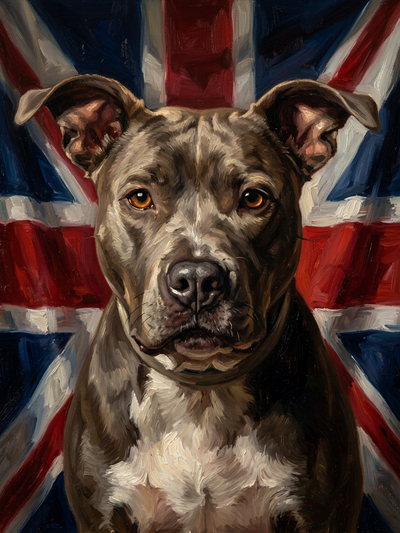
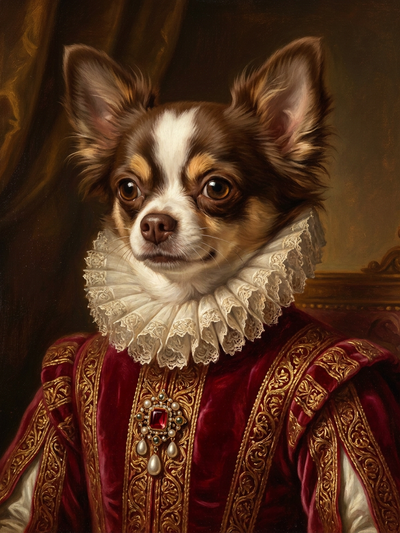
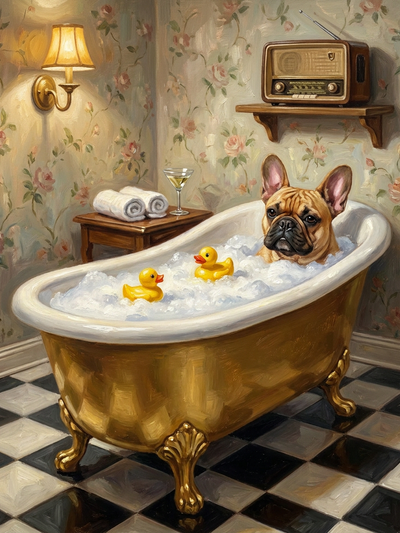
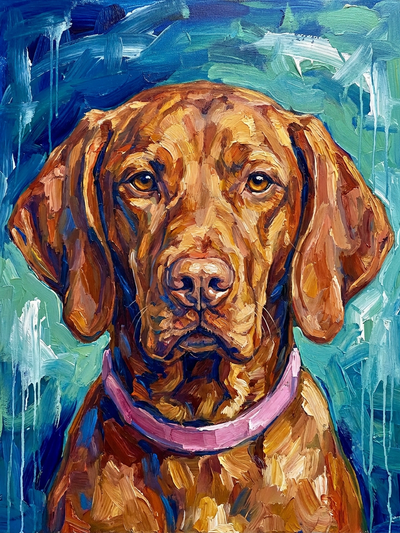
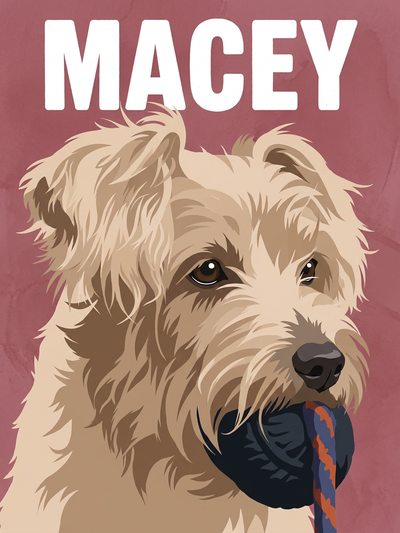
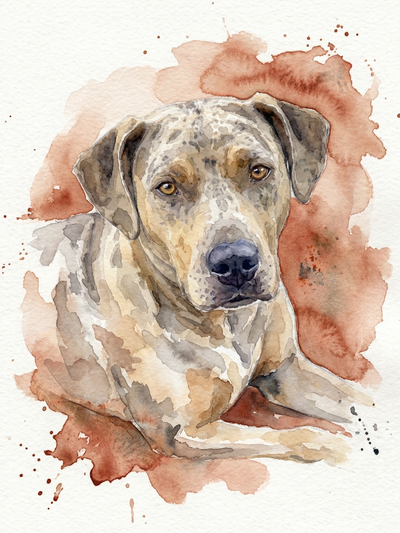
The Afghan Hound has a coat that makes other dogs look unfinished. The long, silky, flowing hair — covering the body, the legs and the ears in quantities that seem structurally implausible — combined with the narrow, aristocratic head and the general bearing of a dog that considers itself several social strata above its surroundings, makes the Afghan one of the most visually dramatic dogs in the world. Portrait styles that work with flowing texture and aristocratic bearing find the Afghan Hound an irresistible subject, and the results are consistently among the most spectacular in the Furcasso range.
Coat colours and how they render
Afghan Hounds come in almost every colour — black, black and tan, red, cream, blue, brindle and domino (where the coat has a lighter saddle pattern) among the most common. The coat is always the same: long, very fine and silky, covering the entire body with the exception of the saddle area on the back in mature dogs.
Cream and golden Afghan Hounds produce oil painting results of extraordinary warmth and flow. The long silky coat in these colours, rendered in the painting tradition, has a quality of golden luminosity that suits the breed's regal bearing.
Black and black and tan Afghan Hounds produce the most dramatic formal results. In Old Masters and renaissance the deep dark coat flowing around the narrow, elegant head creates portraits of great presence.
Red Afghan Hounds — where the coat is a warm, vivid red — suit oil painting with the same warmth that Irish Setters do. The long silky coat in deep red, flowing in the painting tradition, creates portraits of great richness.
Brindle Afghan Hounds have the striped pattern within the long silky coat — a subtle and unusual combination that oil painting and impressionist styles handle with particular depth.
Recommended styles for Afghan Hounds
Oil Painting — the flowing long coat in warm tones produces some of the most spectacular results in the Furcasso catalogue. Watercolour — the loose, flowing quality of the medium suits the flowing coat naturally. Impressionist — the long silky coat's movement and texture suit the loose brushwork of this style. Renaissance — the aristocratic bearing and the spectacular coat suit the formal portrait tradition. Pre-Raphaelite — the romantic detail of this tradition and the flowing coat are a natural combination.
Photo tips
The coat is the defining portrait feature of the Afghan Hound and the source photo should show it at its fullest and most flowing. A photo taken outdoors in a light breeze — or indoors after the coat has been groomed and allowed to settle naturally — shows the coat's flow and volume. The narrow head should be clearly visible above the surrounding coat — a photo where the face is partially obscured by coat loses the breed's most distinctive contrast of narrow refined head against spectacular flowing surround. Natural light from the side picks out the coat's silky texture most clearly.